Siux Fenix vs Electra vs Diablo vs Trilogy (2026): Which Siux Family Fits Your Game?
Compare Siux Fenix, Electra, Diablo, and Trilogy in 2026 by power, balance, control, forgiveness, and court role so you buy the right Siux family the first time.
Updated for August 2026.
Quick answer
If you want the short version, use this:
- Choose Fenix if you are an advanced attacker who genuinely wants the most aggressive Siux lane.
- Choose Electra if you still want pace, spin, and pressure, but not the full Fenix burden.
- Choose Diablo if you want the most balanced all-court Siux family.
- Choose Trilogy if you want easier control, cleaner placement, and more defensive comfort.
For a lot of club players, the smartest Siux is Electra, Diablo, or Trilogy before it is full Fenix.
Affiliate disclosure
Some links in this guide are affiliate links. If you buy through them, we may earn a commission at no extra cost to you.
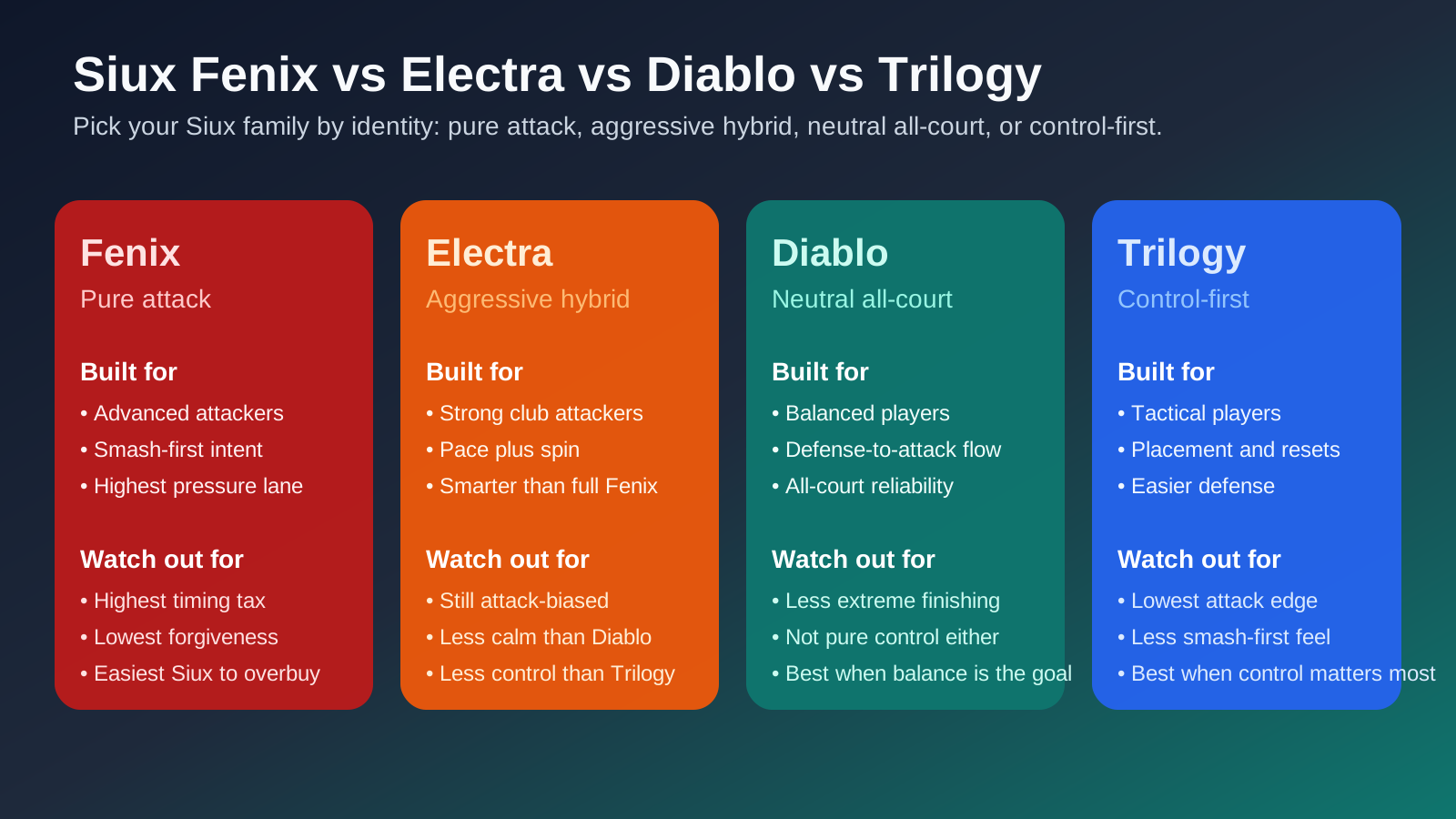
What each Siux family means right now
Siux is not really one racket with four paint jobs.
It is four different game identities.
- Fenix is the attack-first lane.
- Electra is the aggressive hybrid lane.
- Diablo is the neutral all-court hybrid lane.
- Trilogy is the control-first lane.
If you want the broader geometry behind why these families feel different, our guide to round vs teardrop vs diamond padel racket shape is the best companion read.
In the current 2026 lineup, official Siux pages position the Fenix Pro 2026 Black as the high-balance power option, the Electra Pro 2026 Fire Red as the medium-balance attack-minded option, the Diablo Pro 2026 Royal Blue as the multipurpose teardrop option, and the Trilogy Pro 2026 Ash Green as the control-and-precision option.
That gives you a very usable four-step ladder:
- pure attack
- attack-minded hybrid
- neutral all-court hybrid
- pure control
Fenix vs Electra vs Diablo vs Trilogy at a glance
| Family | Core 2026 fit | Best for | Biggest tradeoff |
|---|---|---|---|
| Fenix | most aggressive Siux lane | advanced attackers who want maximum smash and overhead pressure | highest timing tax and least forgiveness |
| Electra | attack-minded hybrid | strong club players who still want pace and spin without a full diamond burden | less automatic control than Trilogy and less neutral than Diablo |
| Diablo | balanced all-court hybrid | players who want one racket to move cleanly from defense to attack | less extreme finishing than Fenix and less point-and-place certainty than Trilogy |
| Trilogy | control-first Siux lane | tactical players who value placement, resets, and easier defense | lowest aggression ceiling of the four |
The most useful way to read this lineup is not best to worst.
It is which burden do you actually want to carry for a full match?
Choose your game identity before you buy the most aggressive Siux
This is the most important point in the article.
A lot of buyers see the most aggressive racket in a brand family and assume that means best.
That is the wrong sequence.
The most aggressive Siux is not automatically the smartest Siux.
It is simply the most demanding one.
If your game is already built around heavy overhead pressure, fast point-finishing, and confident front-foot attacking, that may be perfect.
But if your real match identity depends more on transitions, easier reactions, cleaner resets, or lower fatigue over two sets, the smarter answer usually moves down the ladder to Electra, Diablo, or Trilogy.
The best buying order is:
- choose your game identity
- choose how much attack burden you really want
- choose how much forgiveness and comfort you need
- then decide whether you truly need the most aggressive badge
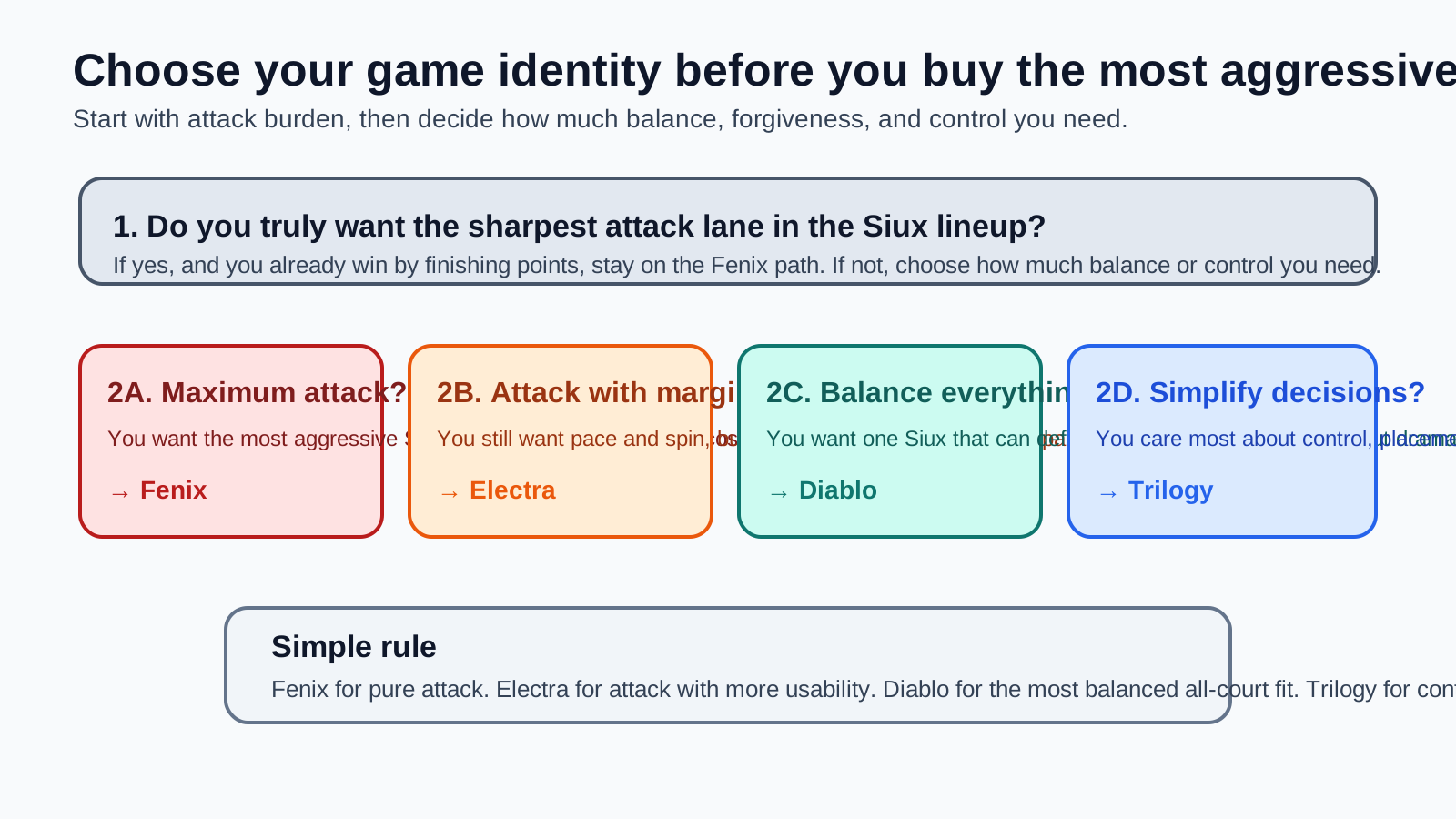
Pick the Siux family you can repeat for a full match, not just the one that looks most aggressive on paper.
Four filters that matter before you buy
1) How much attack burden do you actually want?
This is the cleanest split in the lineup.
- Fenix asks you to live in the attack lane.
- Electra still wants aggression, but with a more usable middle ground.
- Diablo gives you a more neutral balance between defending and attacking.
- Trilogy puts control and placement ahead of raw pressure.
If you already know you play your best padel by shortening points from above, Fenix makes sense.
If you are still deciding how much attack tax you want to pay every rally, it usually makes more sense to stop at Electra or Diablo first.
2) How much balance and hand speed do you need?
This is where Electra and Diablo separate themselves from Fenix.
Fenix is easier to justify when you want the most aggressive response.
Electra makes more sense when you still want a lively, offensive personality, but in a racket that does not force you into the heaviest-feeling decision path every time you are a little late.
Diablo makes even more sense when you want a hybrid that stays calm through transitions and gives you fewer awkward tradeoffs between defense and attack.
If hand speed, fatigue, and easier repeatability already matter a lot in your decisions, our guide to the best padel rackets by weight is the best companion read.
3) How much forgiveness and comfort do you need when rallies get messy?
This is where a lot of buyers get honest with themselves.
The wrong racket often feels exciting for five minutes and demanding for two full sets.
- Fenix gives you the least forgiveness when timing slips.
- Electra still has an attacking edge, but it is less punishing than living at the full Fenix end.
- Diablo usually gives the broadest all-court margin when you need to defend first and attack second.
- Trilogy gives you the easiest control and the calmest defensive personality.
If easy reactions and low fatigue matter more than headline aggression, our best lightweight padel rackets for fast hands and easy defense guide is a useful companion.
4) What court role do you actually play most often?
This matters more than buyers admit.
- Fenix makes the most sense for the attacker who wants to finish points.
- Electra makes a lot of sense for the strong club player who still wants to pressure the ball but does not want every exchange to feel extreme.
- Diablo fits the all-court player who wins by adjusting instead of forcing one pattern all match.
- Trilogy makes the most sense for the tactical or control-first player who values placement, resets, and easier defense.
That is the same logic behind our guides to the best padel rackets for all-court players and the best padel rackets for right-side players.
Who should buy Fenix?
Fenix is the answer for the player who genuinely wants the most aggressive Siux family.
In plain English, that usually means:
- you are already an advanced attacker
- you want your racket to help you finish points, not just build them
- you like a higher-burden, harder-edged response
- you accept that the reward comes with less forgiveness
What Fenix is not:
- the default Siux for every serious buyer
- the smartest answer for most improving club players
- the racket you should choose just because it looks like the flagship
If you already know your game lives on the left side and leans heavily toward attack, our best padel rackets for advanced players guide is the right next read.
Who should buy Electra?
Electra is the family for players who still want Siux attitude, speed, and pressure, but in a more usable package than Fenix.
It is a strong fit if:
- you want an attack-minded racket, but not the full diamond burden
- you still value spin and point pressure
- you are a strong club player who wants more punch without going all the way to pure power
- you want something that still feels lively when the match speeds up
This is why Electra matters so much in the lineup.
For a lot of non-elite buyers, it is the first Siux that feels aggressive and realistic.
Who should buy Diablo?
Diablo is the cleanest Siux answer for players who do a bit of everything and do not want their racket to force a personality on every point.
It is a strong fit if:
- you move between defense and attack naturally
- you want balance more than edge
- you like a hybrid feel that still lets you accelerate the ball when needed
- you want an all-court Siux that stays believable under pressure
If your instinct is usually I want one racket that can handle most match states well, Diablo is probably the best place to stop first.
Who should buy Trilogy?
Trilogy is the honest answer for the player who wants the Siux family through control, not aggression.
It is a strong fit if:
- you value placement over raw pace
- you want easier resets and cleaner defense
- you are a tactical or right-side player
- you want a racket that helps you make simpler decisions under pressure
Trilogy is not a boring fallback.
It is the family that makes the most sense when your real goal is repeatability, not maximum racket attitude.
If that sounds like your game, our best padel rackets for right-side players guide is a useful next read.
When Electra is smarter than jumping straight to Fenix
This is the question a lot of readers actually need answered.
Choose Electra over Fenix if:
- you still want a racket that feels aggressive, but not one that punishes every small timing error
- you want more pace and spin without committing to the heaviest attack identity in the lineup
- you play strong club-level padel and need something you can use well for a full match
- you want attack support, not attack pressure at all costs
Put simply:
Electra is the smarter buy when you want offensive intent without living at the sharpest end of the Siux range.
When Diablo is the better hybrid answer
Diablo is the better answer than Electra when you do not really want an attack-leaning personality as your default.
Choose Diablo if:
- you want the most neutral all-court fit
- you win through adaptation, not just pressure
- you want one racket that feels believable in defense, transition, and attack
- you want a hybrid answer without constantly being nudged toward the most aggressive decision
That makes Diablo especially attractive for players who are better described as all-court than pure left-side attacker.
When Trilogy is the better answer for control-first players
Trilogy is the better answer than Fenix, and often better than Electra, when your real match wins come from placement, resets, and cleaner choices.
Choose Trilogy if:
- you care more about where the ball lands than how hard it leaves the face
- you want easier defense and calmer handling
- you prefer control-first padel on the right side or in tactical all-court roles
- you know that fatigue and over-hitting cost you more points than not having enough racket aggression
For a lot of players, easier to use is not a compromise.
It is the thing that lets them actually play better padel.
How advanced and improving club players should read the Siux lineup
This is the simplest version:
- Advanced attacker: start with Fenix, then ask whether you really need that much attack burden every match.
- Strong club player with offensive intent: start with Electra.
- Balanced all-court player: start with Diablo.
- Control-first or tactical player: start with Trilogy.
- Improving player who keeps overbuying rackets: move one family calmer than your ego wants.
That last point saves a lot of money.
The wrong Siux is usually not too weak.
It is too demanding.
Which Siux should you buy?
If you want the cleanest final answer, use this:
- Buy Fenix if you are an advanced attacker who truly wants the most aggressive Siux lane.
- Buy Electra if you want the smartest mix of attack personality and real-world usability.
- Buy Diablo if you want the most balanced all-court Siux family.
- Buy Trilogy if you want easier control, cleaner placement, and more defensive comfort.
If you are still stuck, ask yourself four questions:
- Do I actually win through attack, or do I just like the idea of attack?
- Do I want more pace, more balance, or more control?
- When my timing drops, do I need help from forgiveness or from aggression?
- Am I buying the boldest Siux, or the Siux I will actually play best with?
That fourth question usually gives the honest answer.
If you already know your Siux lane
If you just want to check current searches and availability, these are the most useful starting points:
- Browse Siux Fenix 2026 on Amazon
- Browse Siux Electra 2026 on Amazon
- Browse Siux Diablo 2026 on Amazon
- Browse Siux Trilogy 2026 on Amazon
- Search Siux Fenix vs Electra vs Diablo vs Trilogy
FAQ
Is Fenix better than Electra?
Not automatically. Fenix is better only if you truly want the most aggressive Siux lane. Electra is better for many club players because it gives you more usable offense with less total burden.
What is the difference between Electra and Diablo?
Electra is the more attack-minded hybrid. Diablo is the more neutral all-court hybrid. If you want more pressure and edge, start with Electra. If you want smoother transitions and broader balance, start with Diablo.
Is Trilogy only for defensive players?
No. Trilogy is for control-first players, not passive players. It is the better answer when placement, resets, and easier decision-making matter more than maximum aggression.
Which Siux family is best for right-side players?
Trilogy is usually the clearest right-side answer because of its control-first personality, but Diablo also makes sense for right-side players who still want a more balanced all-court feel.
Should most club players buy Fenix?
Usually not. Most club players should start by asking whether Electra, Diablo, or Trilogy gives them a better mix of repeatability, comfort, and match-long usability.
Final verdict
If you want the sharpest takeaway, it is this:
Fenix is the right Siux only if you truly want the most aggressive attack lane. Electra is the smarter step down when you still want pace and spin without the full diamond tax. Diablo is the cleanest all-court answer when you need balance more than edge. Trilogy is the control-first choice when placement, defense, and easier decision-making matter most.
The smart buy is the Siux family you can use for a full match, not just the one that looks most intimidating on the shelf.