Round vs Teardrop vs Diamond Padel Rackets: Which Shape Should You Buy in 2026?
Trying to choose between round, teardrop, and diamond padel rackets? Here’s who each shape fits, what to avoid, and how weight, balance, and comfort change the answer.
Quick answer
If you want the short version, here it is:
- Round is the safest choice for most beginners and control-first players.
- Teardrop is the best step-up shape for players who want more all-round performance.
- Diamond usually makes sense only when you already hit cleanly, like a more attacking setup, and can handle a smaller margin for error.
Most players do best when they think about shape in this order: round -> teardrop -> diamond.
Affiliate disclosure
Some links in this guide are affiliate links. If you buy through them, we may earn a commission at no extra cost to you.
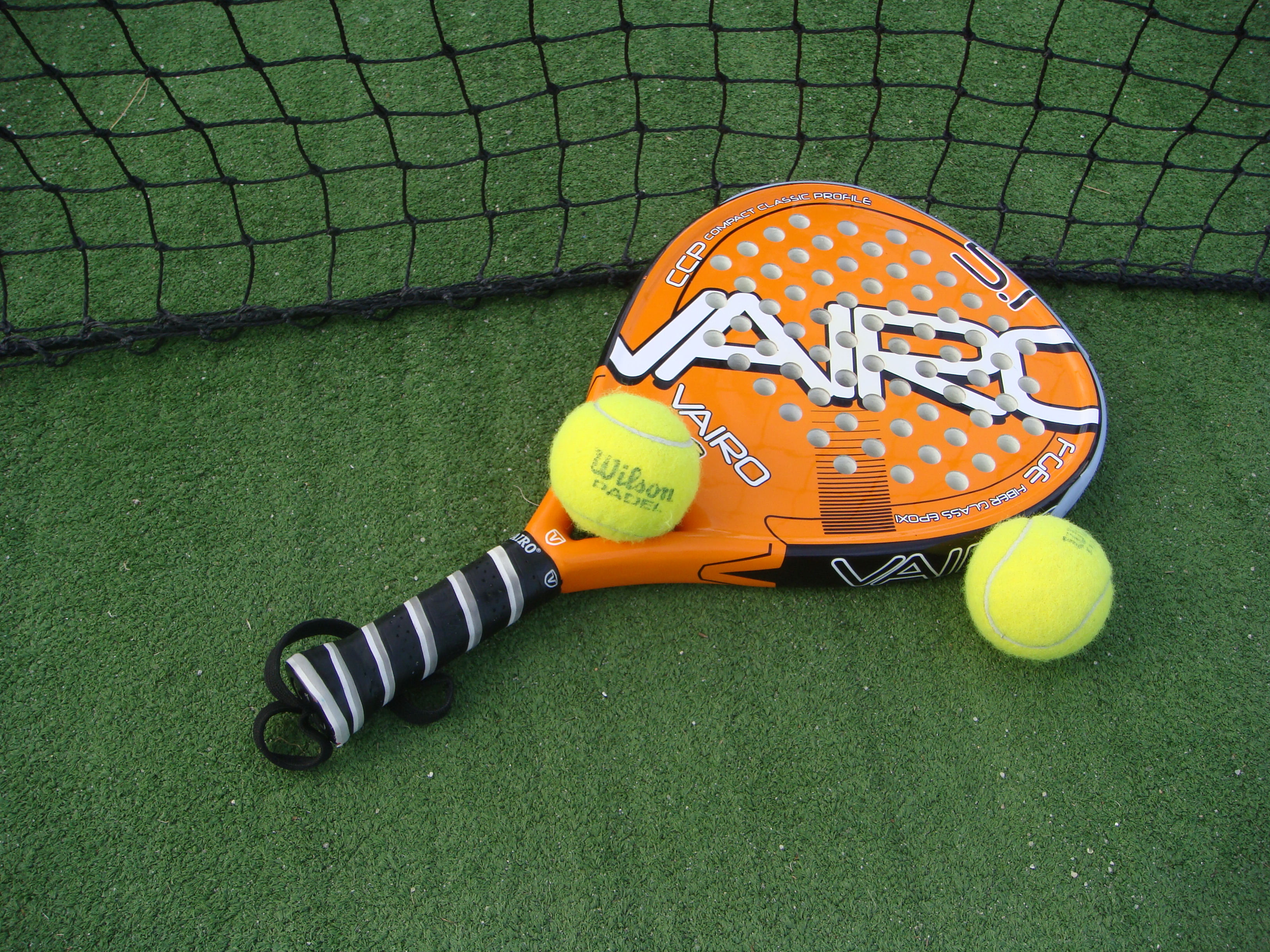
Photo credit: hero image by Imageuser via Wikimedia Commons, licensed under CC BY 3.0.
What racket shape actually changes
A lot of buying guides make shape sound too simple.
Yes, round usually means more control, teardrop usually means balance, and diamond usually means power. But that only matters because shape changes four things that you actually feel on court:
- where the sweet spot sits
- how the weight feels during the swing
- how forgiving the racket is on mishits
- how comfortable or demanding the racket feels over a full match
That is why shape is such a useful first filter.
Round padel rackets
Round rackets usually have the most forgiving setup of the three. The sweet spot tends to sit more centrally, the racket often feels easier to maneuver, and the margin for error is usually better when your contact is not perfect.
That makes round a strong default for:
- brand-new beginners
- players who win more through placement than raw power
- players who want easier defense and quicker preparation
- players who care about comfort and control first
It is also why so many readers looking at the best padel rackets for beginners should start their shortlist here.
The downside is simple: round rackets usually give you less free attacking weight than more aggressive shapes.
Teardrop padel rackets
Teardrop is the middle lane.
It usually moves the sweet spot slightly higher, adds a bit more attacking upside, and keeps enough control to stay usable in normal club play. For many players, this is the shape that feels the most complete once they are ready to move beyond a pure beginner-friendly racket.
Teardrop is often the smart choice for:
- improving players who want more finish without losing too much control
- all-court intermediates
- players who attack sometimes but still need help in defense
- tennis converts who are not ready for a demanding diamond yet
If your game is moving forward but you still want a racket that behaves well in more situations, teardrop is often the sweet spot.
Diamond padel rackets
Diamond is the most tempting shape because it promises the biggest power ceiling.
The catch is that the power only shows up when your timing, contact point, and handling are already good enough to use it well. Diamond shapes usually feel less forgiving, especially when you hit late, defend under pressure, or get tired.
Diamond tends to fit:
- advanced players
- aggressive overhead-first players
- players who can consistently hit cleanly
- players who actively want a more attacking balance, not just a more expensive racket
That is why a diamond racket can feel amazing for one player and terrible for another.
Round vs teardrop vs diamond at a glance
Use this as the fast decision table.
| Shape | Sweet spot | Typical feel | Biggest strength | Main tradeoff | Best fit |
|---|---|---|---|---|---|
| Round | Larger and more central | Easier handling, more control-led | Forgiveness and comfort | Less easy power | Beginners, control-first players, comfort seekers |
| Teardrop | Mid-positioned | Balanced, versatile | Best blend of control and power | Less forgiving than round | Improving players and all-court intermediates |
| Diamond | Higher and smaller | More attacking, more demanding | Higher power ceiling | Smaller margin for error | Advanced, aggressive players |
Shape names are category labels, not literal geometry. A “diamond” padel racket still has rounded edges and a playable head shape; it usually just carries more mass and sweet-spot emphasis higher in the head than a round control racket.
Which shape should you buy for your level and style?
This is the part most buyers actually need.
1) Brand-new beginner
If you are still learning clean contact, walls, defensive positioning, and basic consistency, start with round.
You do not need a racket that asks for perfect timing. You need one that helps you keep more balls in play, feel more confident, and build repeatable technique.
A lot of beginners lose months by buying something that looks exciting but punishes every small mistake. If that sounds familiar, stay close to our beginner-friendly logic in the best padel rackets for beginners guide.
Best starting shape: round
Usually wrong first jump: diamond
2) Improving control-first player
This player is no longer brand new, but still wins more through consistency than through heavy winners.
If that is you, round is still a valid answer. Not every improving player needs to upgrade shapes right away. A forgiving round racket can still be the right tool if you are developing touch, defense, and confidence under pressure.
Move toward teardrop only when you can honestly say you want a bit more finish and your contact quality is good enough to handle less forgiveness.
If you are hovering between safe control and a real upgrade, our best padel rackets for intermediate players guide is the right next read.
Best starting shape: round or a gentle teardrop
Usually wrong move: chasing diamond too early because you want “more power”
3) All-court intermediate
This is where teardrop often becomes the best answer.
An all-court intermediate usually needs a racket that can do both jobs:
- stay manageable in defense
- offer enough attacking weight to finish better when the chance comes
That is exactly why teardrop is such a popular middle ground. It is not the easiest shape, and it is not the most explosive. It is simply the most balanced fit for a lot of club players who have moved beyond true beginner gear.
Best starting shape: teardrop
Usually wrong move: buying a very head-heavy diamond just because it feels like the “advanced” option
4) Aggressive advanced player
If your overhead game is already a weapon, your contact is clean, and you genuinely want more attacking weight, then diamond can make sense.
The key word is genuinely.
Not every advanced player needs diamond, and not every player who likes to attack is ready for the most demanding version of it. But this is the player group most likely to actually benefit from the shape instead of just admiring it.
This is also the point where readers should be honest about whether they are buying a performance fit or a fantasy. If the pro-player side of the market is pulling you in, read our Should You Buy a Pro Player Padel Racket? guide before you commit.
Best starting shape: diamond or an attack-leaning teardrop
Usually wrong move: assuming the hardest racket is automatically the best racket
5) Tennis player switching into padel
This player profile gets misread all the time.
A lot of tennis players think, “I swing fast, so I should buy power.” Sometimes that works. Very often it does not.
Padel asks for different timing, different preparation, more defensive control, and more comfort on compact shots. That means many tennis converts do better with teardrop first, not diamond.
If you are also sensitive to mishits, vibration, or long-session fatigue, the smarter call may even be a round or softer all-round option. That is also where our best padel rackets for tennis elbow guide becomes useful, especially if comfort is part of the decision.
Best starting shape: teardrop
Usually wrong move: jumping straight into a hard, head-heavy diamond before your padel timing is ready
Don’t buy this shape yet
A clear buying guide should tell you what to avoid, not just what sounds nice.
Do not buy diamond yet if…
- you still mishit often
- your defense breaks down under pressure
- you get late on volleys or overheads
- you want the racket to create power you do not yet generate cleanly
- you are mostly choosing it because pros use it
Do not rush into teardrop if…
- you are still building basic confidence
- you struggle to repeat contact cleanly
- you care more about comfort and forgiveness than about added finish
Do not assume round is only for weak players if…
- you play a control-first game
- you value easier handling more than raw power
- you want more comfort across long matches
- you care about staying solid from the back court and in transition
A round racket is not automatically “less serious.” It is often just a smarter fit.
Shape is only the first filter: weight, balance, foam, and stiffness still matter
This is where a lot of racket advice falls apart.
Two rackets can share the same shape and still feel very different.
A round racket with a firmer feel can still be demanding. A diamond racket with a softer setup can still be more manageable than the harshest power-first models. That is why you should always think in layers:
- Start with shape — round, teardrop, or diamond
- Check balance — more handle-friendly or more head-heavy
- Check weight — easier handling or more mass through the shot
- Check comfort variables — foam feel, stiffness, and how secure the handle feels
If handle feel is part of the problem, do not ignore grip setup. Our padel grips guide can help you fix comfort and control issues that are not actually caused by shape alone.
And if you are still unsure whether you are choosing a shape or choosing a brand personality, our Bullpadel vs Nox vs Head guide is the better broader comparison before you buy.
If you want to browse by shape
If you already know the lane you want, these search links are the fastest way to compare options by type:
- Browse round padel rackets on Amazon
- Browse teardrop padel rackets on Amazon
- Browse diamond padel rackets on Amazon
- Browse control padel rackets on Amazon
- Browse power padel rackets on Amazon
FAQ
Is a round padel racket always best for beginners?
Usually, yes. It is the safest default because it tends to offer the biggest margin for error, the easiest handling, and the best comfort profile for newer players.
When should you switch from round to teardrop?
Switch when you are consistently making clean contact and want more all-round performance without giving up too much control.
Who should avoid a diamond padel racket?
Most beginners, many ambitious intermediates, and any player who still relies heavily on racket forgiveness should avoid diamond for now.
Is shape more important than weight and balance?
Shape is the best first filter, but it is not the whole answer. Weight, balance, foam, stiffness, and handle setup can change the feel a lot.
What shape should a tennis player choose first?
Teardrop is often the best bridge for tennis players moving into padel because it offers more all-round balance without forcing them into a demanding power-first setup too early.
Final takeaway
If you want the simplest rule, use this one:
- Round if you want control, comfort, and forgiveness
- Teardrop if you want the best all-round blend
- Diamond if you already have the skill to earn the extra power
The best racket shape is not the one that looks the most advanced.
It is the one that helps you play better, more often, with fewer bad misses and fewer expensive buying mistakes.