Best Padel Racket for Tennis Players Switching to Padel (2026): Shape, Weight, and Feel
Most tennis players should not start with the most powerful padel racket. Here’s how to choose shape, balance, weight, and feel for a smarter first buy in 2026.
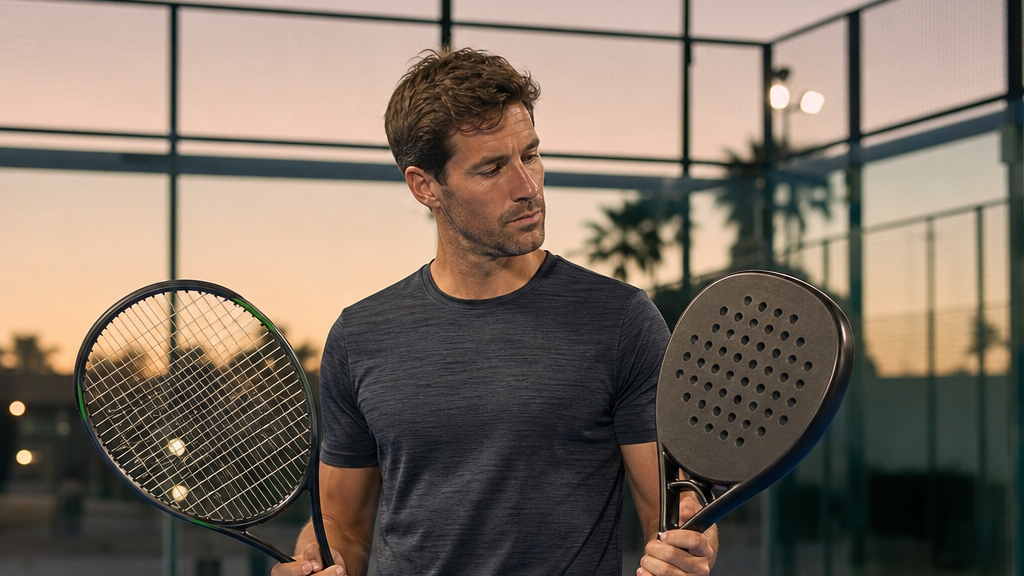
Quick answer
The best first padel racket for most tennis players is usually a manageable teardrop or forgiving round model with low-to-even balance, medium weight, and a comfortable feel.
The biggest mistake is buying a stiff, head-heavy power racket just because it feels more “serious” or more familiar coming from tennis. That usually preserves the wrong instincts: overhitting, rushing contact, and trying to finish points too early.
If you are still learning the tactical differences covered in our guide to padel vs tennis, your first racket should make padel easier to learn, not harder to survive.
Affiliate disclosure
Some links in this guide are affiliate links. If you buy through them, we may earn a commission at no extra cost to you.
Why tennis players often buy the wrong first padel racket
Tennis players usually arrive in padel with real advantages: timing, coordination, footwork, and a feel for the ball.
But that same background creates a buying trap.
A lot of ex-tennis players assume they should buy the most powerful frame they can handle because they already swing fast. On paper, that sounds logical. On court, it often backfires.
Padel rewards compact preparation, softer hands, better defense, more patience, and smarter overhead choices. A racket that is too stiff, too head-heavy, or too demanding can lock you into old habits instead of helping you build padel habits.
That is why the best first racket for a tennis player is often less aggressive than the racket that feels most exciting in the first five minutes.
The best first-racket profile for most tennis players
Think about your first padel racket in this order.
1) Shape: start with teardrop or forgiving round
If you want the full shape breakdown, read our guide to round vs teardrop vs diamond padel rackets.
For tennis players specifically:
- Teardrop is usually the best bridge if you still want some attacking upside without jumping straight into a demanding power-first setup.
- Round is often the smartest answer if you overhit, defend a lot, want easier repetition, or care about comfort first.
- Diamond is usually too much racket too early unless you already have clean padel timing and know exactly why you want the extra attacking weight.
The right first-racket shape should help you slow the game down mentally while still keeping enough life in the frame to avoid feeling dull.
2) Balance: low to even is safer than head-heavy
Balance matters just as much as shape.
A low-balance or even-balance racket usually feels quicker to prepare, easier to control in defense, and less punishing when you are late. That matters a lot in padel because you are constantly adjusting off the glass, blocking fast balls, and reacting in tighter spaces than in tennis.
A head-heavy racket can feel exciting on overheads, but it often asks for cleaner timing than a first-time padel buyer actually has.
3) Weight: medium usually wins
A very light racket can feel too insubstantial. A very heavy racket can feel great for ten clean swings and terrible by the end of the second set.
For most tennis players, the sweet spot is usually a manageable medium-weight setup. That gives you enough stability to avoid a flimsy feel without dragging you into slow preparation or arm fatigue.
As a simple rule:
- lighter works best when you want quicker hands and less strain
- medium is the safest all-around lane for most tennis converts
- heavy should usually wait until your padel contact and conditioning are already proven
4) Feel: comfortable or medium is better than ultra-stiff
A crisp racket can feel attractive to ex-tennis players because the contact seems more direct.
The problem is that ultra-stiff frames also punish mishits harder. In early padel, you are still learning defensive contact, wall timing, softer volleys, and more controlled overhead choices. That is not the best moment to add extra harshness.
Most players switching from tennis do better with a comfortable or medium feel first, then move firmer later if their game truly needs it.
If arm comfort is part of the decision, stay close to the logic in our best padel rackets for tennis elbow guide.
5) Handle feel: familiar matters, but only a little
Some tennis players like a slightly longer handle because it feels more familiar, especially if they occasionally use two hands on the backhand.
That can help, but it is a secondary factor.
Do not let handle familiarity talk you into the wrong shape, wrong balance, or wrong feel. Handle comfort is a useful tiebreaker, not the main filter.
At-a-glance buying framework
Use this table when you are comparing first-racket options.
| Factor | Best default for most tennis players | Why it works | What to avoid first |
|---|---|---|---|
| Shape | Teardrop or forgiving round | Easier blend of control, adaptation, and enough attacking upside | Full power-first diamond |
| Balance | Low to even | Faster preparation and easier defense | Clearly head-heavy setups |
| Weight | Medium | Stable without feeling slow | Very heavy first-racket builds |
| Feel | Comfortable to medium | Better mishit tolerance and less harsh feedback | Ultra-stiff, unforgiving feel |
| Handle | Standard or slightly longer if it genuinely helps | Familiar enough without driving the whole decision | Choosing only for tennis similarity |

Best choices by tennis-player profile
This is where the buying decision gets easier.
Active tennis player trying padel for the first time
You still swing fast, move well, and probably like to take the ball early.
Your best first padel racket is usually a balanced teardrop. It gives you enough pop to avoid feeling boxed in, but it does not punish you as badly as a true power-diamond when your padel timing is still catching up.
If you are tempted to copy advanced players right away, pause and compare that urge against the more forgiving logic in our best padel rackets for beginners guide.
Best fit: balanced teardrop, medium weight, comfortable-to-medium feel
Usual mistake: stiff head-heavy power frame because it feels exciting on day one
Former tennis player who overhits
This player profile is the easiest one to misread.
If you hit too flat, rush volleys, or try to finish every ball too early, the smartest answer is often a round racket or very forgiving teardrop.
You do not need more help generating pace. You need more help repeating good contact and learning when not to force the point.
Best fit: round or gentle teardrop, lower balance, easy handling
Usual mistake: assuming more power will make the transition easier
All-court club player wanting one safe upgrade
This is the player who wants one racket that can defend, volley, and still offer enough finish when the point opens up.
A middle-lane teardrop is usually the safest answer here. It gives you more upside than a pure control-first beginner frame without pushing you all the way into an attack-only personality.
If you are already comfortable with the basics and want the next-step version of this logic, our best padel rackets for intermediate players guide is the right follow-up.
Best fit: teardrop, even balance, medium weight
Usual mistake: buying a “pro” racket before your defense is reliable
Aggressive player who still wants some forgiveness
Some tennis converts are genuinely attack-minded and do not want a full control-first frame.
That is fine. You still do not need to jump straight to a demanding diamond.
A better first move is usually an attack-leaning teardrop or forgiving hybrid, especially if the balance stays reasonable and the feel is not brutally stiff. That gives you room to grow into overhead power without making every defensive ball harder.
Best fit: attack-leaning teardrop, medium weight, medium feel
Usual mistake: skipping the bridge stage and going straight to a pure power racket
Comfort-first or arm-sensitive tennis convert
If your wrist, elbow, or shoulder already gives you feedback, do not negotiate with it.
Start with a round or comfort-first teardrop, lower balance, and the most manageable feel that still gives you confidence. Fresh overgrips, sane weight, and a racket that does not punish late contact are worth more than any prestige factor.
That player should also keep the arm-protection logic from our tennis elbow racket guide in mind before chasing anything firmer.
Best fit: round or comfort-first teardrop, lower balance, soft-to-medium feel
Usual mistake: buying a hard frame because it sounds more advanced
Don’t buy this as your first padel racket
Most tennis players should avoid these first-buy traps:
- a full power-diamond racket with a high balance
- a very heavy frame that feels good only when you are fresh
- an ultra-stiff face that turns every mishit into harsh feedback
- a pro-signature racket chosen for status instead of fit
- a setup built entirely around recreating tennis feel instead of learning padel faster
If you are not sure whether a racket falls into that danger zone, ask one blunt question:
Will this racket help me play more controlled padel, or will it just reward the part of my tennis game I am supposed to calm down?
That question eliminates a lot of expensive mistakes.
If you want to browse smart first-racket options
These are the most useful search lanes for tennis players building a shortlist:
- Browse padel rackets for tennis players on Amazon
- Browse teardrop padel rackets on Amazon
- Browse round padel rackets on Amazon
- Browse control padel rackets on Amazon
- Browse comfortable padel rackets on Amazon
How to compare two shortlist rackets without guessing
If two rackets both look plausible, compare them in this order:
- Shape — which one gives you the better mix of forgiveness and attack for your current stage?
- Balance — which one will be easier to prepare and defend with under pressure?
- Weight — which one still feels manageable late in a match?
- Feel — which one helps you repeat good contact instead of rewarding one clean smash?
That is the same logic most tennis players should use before they compare brand names or chase “pro” marketing.
FAQ
Should tennis players start with a diamond padel racket?
Usually not. A diamond racket often gives away too much forgiveness and asks for cleaner padel timing than most first-time buyers have.
Is teardrop or round better for a first padel racket?
Teardrop is usually the best bridge for many tennis players, while round is often the smartest answer for overhitters, comfort-first players, and anyone who wants easier repetition.
What weight should a tennis player choose in padel?
Most players do best in a manageable medium range. Too light can feel unstable, and too heavy can make preparation and arm comfort worse over time.
Should ex-tennis players use a longer handle?
Sometimes, yes. A slightly longer handle can feel more familiar, especially for two-handed comfort, but it should never outweigh shape, balance, and feel.
What should you avoid as your first padel racket?
Avoid a high-balance, power-first, very stiff racket unless you already know your padel timing is clean and you have a clear reason to accept the smaller margin for error.
Final takeaway
The best padel racket for a tennis player is usually not the one that feels most like a tennis racket.
It is the one that helps you adapt to padel faster.
For most players, that means:
- teardrop first if you want the best bridge
- round first if you overhit or want more forgiveness
- diamond later if your padel timing, defense, and overhead control already justify it
Your first padel racket should help you unlearn the wrong tennis habits, not reward them.