Padel vs Tennis: What’s the Difference and Which Should You Play?
Compare padel vs tennis on court size, rules, rackets, movement, and learning curve so you can decide which sport fits you best.
Quick answer
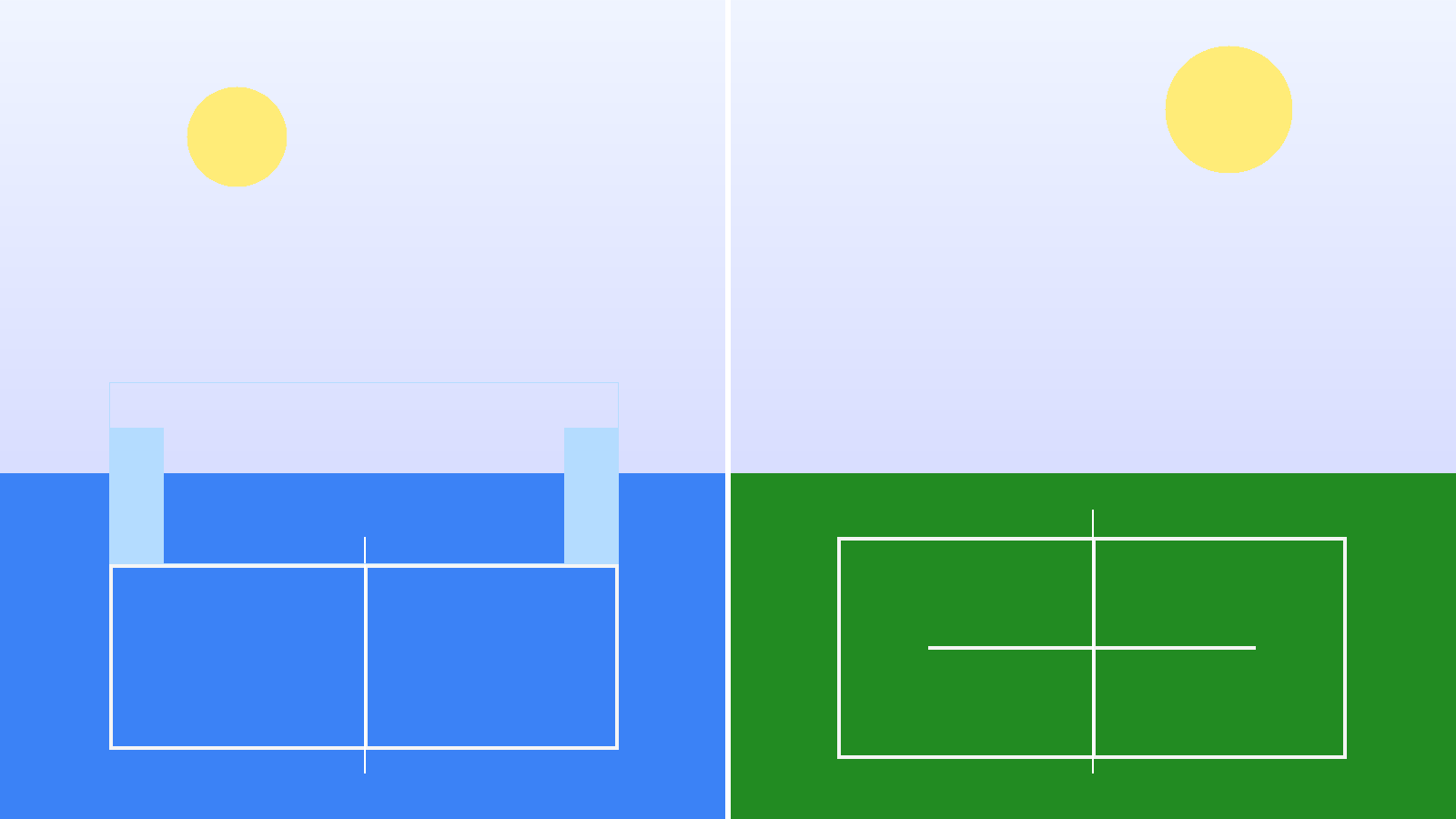
Padel and tennis share the same basic scoring language, but they feel very different once you step on court. Padel is played on a smaller enclosed court, uses solid rackets instead of strung rackets, starts every point with an underarm serve, and lets you use the glass after the ball bounces. Tennis gives you a larger open court, an overarm serve, and more room to win with power and first-strike shotmaking.
If you want a sport that is easier to start, more doubles-focused, and built around control, angles, and teamwork, padel is usually the easier entry point. If you want more court coverage, more serving variety, and a bigger premium on power and individual shotmaking, tennis is the better fit.
Who this guide is for
This comparison is for:
- complete beginners choosing their first racket sport
- tennis players curious about trying padel
- social players deciding which sport is easier to learn
- buyers trying to understand whether padel gear and tennis gear are interchangeable
The biggest differences at a glance
| Area | Padel | Tennis |
|---|---|---|
| Court | 20m x 10m enclosed court with glass and mesh | 23.77m x 10.97m open court for doubles |
| Format | Doubles only in normal play | Singles or doubles |
| Serve | Underarm after one bounce | Overarm serve |
| Walls | In play after the ball bounces | Not part of the sport |
| Racket | Solid perforated racket | Strung racket |
| Ball | Slightly lower pressure than tennis ball | Standard tennis ball |
| Style | Control, positioning, teamwork, rebounds | Power, spin, court coverage, serve advantage |
| Beginner feel | Usually easier to sustain rallies early | Steeper learning curve for many new players |
Court and space change the whole game
The simplest way to understand padel vs tennis is to start with the court.
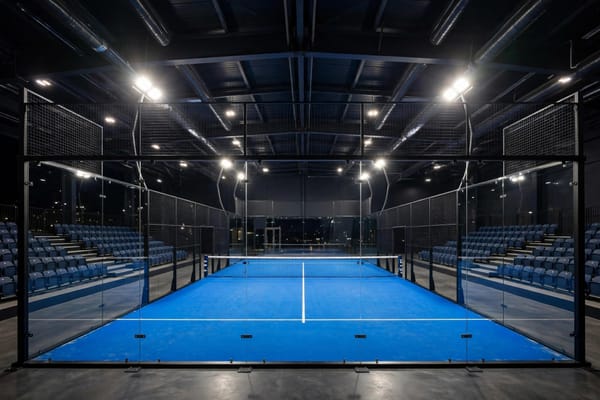
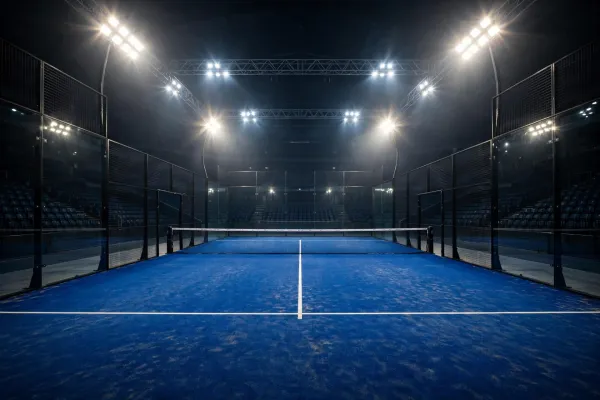
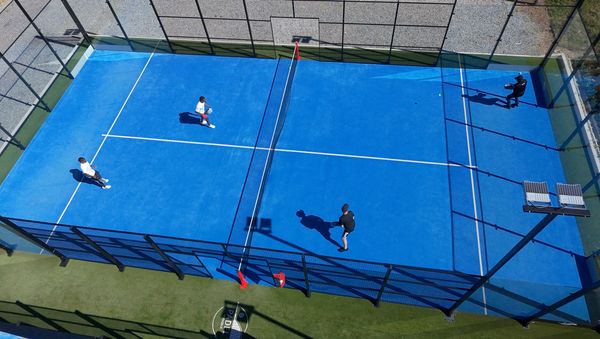
A padel court is much smaller, measuring 20m by 10m, and it is enclosed by glass and mesh. A tennis court is longer and wider, and there are no walls in play. That size difference changes both the physical demand and the tactical rhythm.
In tennis, you often win points by creating space, pushing your opponent off court, or finishing quickly with a strong serve or aggressive groundstroke. In padel, space is tighter, the ball stays alive longer because of the walls, and points often become a positioning battle rather than a pure hitting contest.
For beginners, that smaller court usually makes padel feel less intimidating. You do not need the same serving mechanics or the same amount of ground to cover. For experienced players, the walls add a new layer of timing and anticipation that makes padel feel strategic rather than simple.
The walls are the real separator
Many people say padel is like tennis plus walls, and that is basically right.
In padel, the ball can bounce on your side and then hit the back glass before you play it back. During rallies, the ball can also come off the cage after one bounce and remain live. On serves, though, if the ball hits the cage after bouncing, it is out. Those wall rules create longer exchanges, more resets, and a defensive style where patience matters.
That means a hard shot in padel is not automatically a winner. If the ball comes back off the glass in a comfortable way, your opponents may get another chance. In tennis, clean pace and depth are more likely to end the point outright.
For tennis players crossing over, this is usually the biggest adjustment. The instinct is to take every ball before it reaches the back wall. Strong padel players know when to let the glass help them instead.
The equipment looks similar, but it does not play the same
At a glance, padel and tennis use a ball, a net, and a racket. But the feel in the hand is very different.
Padel rackets are solid and perforated, with no strings. They are shorter than tennis rackets and are designed for compact swings, touch, and maneuverability. Tennis rackets are larger, strung, and better suited to generating pace and spin with longer swings.
The ball is similar too, but not identical. Official guidance notes that padel balls are slightly less pressurized than tennis balls, which helps keep the game lower and a little slower. That lower bounce, combined with the smaller court, is one reason padel rallies are easier for new players to maintain.
What this means in practice:
- tennis rewards fuller swings and bigger acceleration
- padel rewards short preparation and cleaner control
- tennis equipment punishes late contact more harshly
- padel equipment helps in quick exchanges near the net and glass
If you are deciding what to buy first, do not use a tennis racket for padel. The sports are too different. If you need help choosing gear after this comparison, start with our guides to best padel rackets for beginners and best padel rackets for intermediate players.
Serving and scoring: similar language, different pressure
This is where many beginners get confused. The scoring is very familiar if you already know tennis. Padel uses the same 15, 30, 40, deuce, advantage structure, and matches are commonly played as best of three sets.
The difference is how points start.
In padel, the server must bounce the ball and hit it underarm, below waist height, into the opposite service box. If the serve lands in and then hits the back glass, play continues. If it hits the cage first, it is out.
In tennis, the serve is overarm and much more of a weapon. A big first serve can decide points quickly. In padel, the serve is more about starting the rally in a useful position than overwhelming your opponents.
That changes the emotional feel of each sport:
- tennis often has higher serve pressure and more free points
- padel puts more emphasis on the rally after the serve
- tennis can feel more punishing if your serve is weak
- padel lets beginners get into points sooner
Movement and tactics are not interchangeable
A tennis player will recognize many shots in padel, including volleys, forehands, backhands, lobs, and overheads. But the tactics are not a copy-paste.
Padel rewards teamwork, net positioning, and patience. Because the court is enclosed and compact, the best teams usually control space together rather than trying to hit through each other. The lob is especially important because it helps defenders reverse pressure and reclaim the net.
Tennis is more open-ended. You can build points with heavy topspin, exploit width, attack with your serve, or win with baseline pace. Singles tennis especially demands more independent court coverage and greater tolerance for large movement loads.
If your game style is built on power, first strikes, and covering big spaces, tennis may suit you more. If you enjoy angles, soft hands, partnership patterns, and tactical problem-solving, padel may feel instantly addictive.
Which is easier for beginners?
For most true beginners, padel is easier to start.
That does not mean padel is easy at a high level. Good padel is highly tactical and very skilled. But the entry barrier is lower for most recreational players because:
- the court is smaller
- the serve is underarm
- the ball is less explosive
- the walls keep more rallies alive
- doubles naturally spreads responsibility across two players
Tennis can be more frustrating at the start because beginners need to learn an overarm serve, handle a bigger court, and create consistent contact with a strung racket that reacts more sharply to timing errors.
If your goal is to have long rallies and enjoy match play quickly, padel usually wins. If your goal is to build classical racket-sport fundamentals with more upside in singles competition, tennis still has the broader long-term pathway.
Which sport is more physical?
They are physical in different ways.
Tennis generally demands more running distance, especially in singles. There is more open court to defend, more serving stress, and more situations where you have to hit on the stretch.
Padel usually compresses movement into shorter, sharper efforts. You are constantly adjusting your feet, changing direction, recovering after rebounds, and coordinating with a partner. It can feel less overwhelming for beginners, but it still works the legs hard, especially in fast exchanges near the net and glass.
So the better question is not which sport is harder. It is which kind of physical challenge you prefer:
- Tennis: more space, more repeated acceleration, more solo coverage
- Padel: more compact movement, more reaction, more shared positioning
Who should choose padel?
Padel is usually the better pick if you:
- want to learn faster and rally sooner
- mostly want to play doubles socially
- enjoy strategy and teamwork more than pure power
- like the idea of using walls and rebounds as part of the game
- want a racket sport that feels accessible early but still deep later
Who should choose tennis?
Tennis is usually the better pick if you:
- want singles as a core format
- enjoy serving, spin, and bigger shot production
- like the challenge of covering more court on your own
- want the more established competitive and recreational ecosystem in many markets
- are drawn to a sport where technique on the serve and groundstrokes matters heavily from day one
Best next step if you are still unsure
If you have access to both sports, the smartest move is simple: try one beginner session of each.
After one hour, most people can tell what they prefer.
- If you love quick rallies, doubles chemistry, and the puzzle of the walls, choose padel.
- If you love clean ball striking, serving, and using open-court space, choose tennis.
If you decide on padel, these guides are the most useful next reads:
Starter gear if you choose padel
If this comparison points you toward padel, start with gear that makes the first few sessions easier rather than chasing advanced power too early.
- Browse beginner-friendly padel rackets on Amazon if you want a forgiving first racket before comparing specific models.
- Compare padel balls on Amazon so you are not using standard tennis balls for padel sessions.
- Browse clay-court and padel shoes on Amazon if your local courts use sanded artificial turf and you need better grip than running shoes.
FAQ
Is padel just easier tennis?
No. Padel is easier for many beginners to start, but it is not a simplified version of tennis. The walls, smaller court, and doubles-only format create a different tactical sport.
Can tennis players switch to padel quickly?
Usually yes, especially because they already understand timing, positioning basics, and racket-sport movement. The biggest adjustment is learning to use the glass instead of treating every rebound as a lost point.
Is padel always played as doubles?
Yes, padel is generally played as doubles on a standard padel court. Tennis can be played as singles or doubles.
Does padel use the same scoring as tennis?
Mostly yes. Standard padel scoring uses the same point and set structure as tennis, including deuce and advantage.
Which sport is better for fitness?
Both can be excellent. Tennis usually covers more distance, while padel packs more short reaction and directional work into a smaller space.
Final takeaway
Padel and tennis are related, but they reward different strengths. Tennis gives you space, serving, and shotmaking freedom. Padel gives you tighter geometry, walls, teamwork, and a friendlier beginner experience. If your priority is getting into rallies fast and enjoying doubles tactics, padel is usually the better first choice. If your priority is traditional racket-sport technique and open-court variety, tennis remains the better fit.