Bullpadel Ionic Control vs Power vs Light (2026): Which Bullpadel Racket Fits an Improving Player?
Compare Bullpadel Ionic Control, Ionic Light and Ionic Power by shape, balance, weight and player fit, so improving players choose the right 2026 Next racket.
Quick answer
Choose Ionic Control if your game is built on placement, defense, and repeatable contact. Choose Ionic Light if you want a lighter listed range, quicker reactions, and a more balanced all-court brief. Choose Ionic Power only if you already create a dependable attacking finish and deliberately want a diamond, high-balance racket.
For many improving players, the honest order is Control or Light before Power. The best Ionic is the one that makes your normal ball more reliable—not the one with the most aggressive name.
Affiliate disclosure
Some links in this guide are affiliate links. If you buy through them, we may earn a commission at no extra cost to you.
Ionic Control vs Light vs Power at a glance
| Model | Official 2026 profile | Best for | Biggest tradeoff |
|---|---|---|---|
| Ionic Control | round, low balance, 365–375 g, defensive | control-first defenders and improving players who value placement and repeatability | less attacking intent than the Power model |
| Ionic Light | hybrid, medium balance, 350–360 g, versatile | all-court improvers and players prioritising faster hands | less head-weighted finishing pressure than Power |
| Ionic Power | diamond, high balance, 365–375 g, offensive | players with a consistent attacking finish | demands more deliberate preparation in defense and quick exchanges |
The three rackets sit in Bullpadel’s current Next line. That matters because they are not the same decision as the brand’s Hack, Vertex, or Neuron pro-line families. This is a practical progression choice inside Ionic: control first, lighter all-court versatility, or a more attacking commitment.
Start with the job you need the racket to do
A racket comparison is useful only when it reflects the balls you hit when the score gets tight. Are you usually defending from the back glass, blocking at the net, moving through transition, or arriving early enough to finish overheads with confidence?
That is why shape and balance deserve more attention than a cosmetic or a power label. If you want the broader framework, our guide to round vs teardrop vs diamond padel racket shape explains the starting point. In this group, the round/low-balance Control leans toward handling and placement; the hybrid/medium-balance Light sits between the extremes; and the diamond/high-balance Power puts more of the design emphasis toward attack.
Weight is only part of that answer. Two rackets with similar listed grams can still ask different things from your hand because the balance location changes how the mass feels in motion. Our guide to padel racket weight is useful if you are trying to separate a number on a product page from the match-long burden you actually feel.
Bullpadel Ionic Control: choose repeatability before extra attack
The Bullpadel Ionic Control 26 is a round, low-balance 365–375 g model that Bullpadel positions for intermediate defensive play. That is the clearest fit in this group for a player who wants to settle the ball, place it well, and build the point rather than force the finish.
On court, that profile is most useful when your value comes from dependable lobs, blocks, resets, controlled volleys, and returning one more difficult ball. A low-balance, round design does not guarantee that every player will find it effortless, but it is the Ionic choice most aligned with a control-first brief.
Choose Ionic Control when these statements sound like you:
- You win more points through placement and patience than through raw overhead pace.
- You play the right side often, or you want a calmer racket for defense and transition.
- You are improving your technique and want your racket choice to reward repeatable contact.
- You would rather add attack from clean positioning than carry a more demanding head-heavy feel all match.
If that sounds familiar, compare the broader category in our guide to the best control padel rackets for defensive players. Right-side players should also use our right-side racket guide to match their racket to the job they actually do in the pair.
The tradeoff is simple: Control does not make a forceful overhead disappear, but it does not chase the same attacking priority as Power. If your game has not yet earned a more demanding profile, that is often a feature—not a compromise.
Bullpadel Ionic Light: the all-court and faster-hands choice
The Bullpadel Ionic Light 26 uses a hybrid shape, medium balance, and a listed 350–360 g range. Bullpadel positions it as a versatile intermediate racket, making it the natural middle route in this comparison.
Think of Ionic Light as the model for the player who wants a useful answer on both sides of the court: enough structure to attack with intent, but a lighter listed range and more neutral balance brief than Power when quick reactions, recovery, and handling matter.
Bullpadel lists Ionic Light in its women’s segment. That is a catalog label, not a technical rule. The practical buying questions are whether its hybrid shape, medium balance, and 350–360 g listed range match your hand speed, match length, and preferred response.
Choose Ionic Light when these statements sound like you:
- You want one racket to cover defense, transition, volleys, and controlled attack.
- Fast hands at the net and quicker recovery after a rushed ball matter to you.
- You are not trying to force a pure power profile into a developing game.
- You want a balanced step between a control-first round racket and a head-heavier attacking frame.
If fast exchanges are your priority, our guide to the best lightweight padel rackets for fast hands and easy defense gives the wider buying context. The Ionic Light is not automatically the best choice for every player who wants less weight; it is the Ionic model whose listed range and hybrid/medium-balance design make that conversation most relevant.
Bullpadel Ionic Power: buy the attacking profile only when you can use it
The Bullpadel Ionic Power 26 is the offensive option: diamond-shaped, high-balanced, and listed at 365–375 g. Bullpadel positions it for intermediate and advanced players who want a more forceful attacking response.
That makes Power the right choice for a specific buyer, not the default upgrade. It suits the player who already arrives in good positions, can prepare early, and has an attacking finish that shows up consistently rather than occasionally.
Choose Ionic Power when these statements are already true:
- Your overhead finish is dependable enough that you want to lean into it.
- You prefer a more aggressive attacking brief over the easiest possible handling.
- You can keep control when the rally turns from attack back to defense.
- You are choosing a diamond/high-balance profile on purpose, not hoping it will create technique for you.
Do not buy Ionic Power simply because “Power” sounds like the better version. A power-oriented racket cannot replace early preparation, clean contact, or a repeatable overhead. If late defensive balls, rapid volleys, and off-center contact are still the parts of your game that cost points, Ionic Control or Ionic Light is usually the more useful place to improve from.
For a wider level check before you decide, see our best padel rackets for intermediate players. The strongest upgrade is often the one you can use in every phase of a full match.
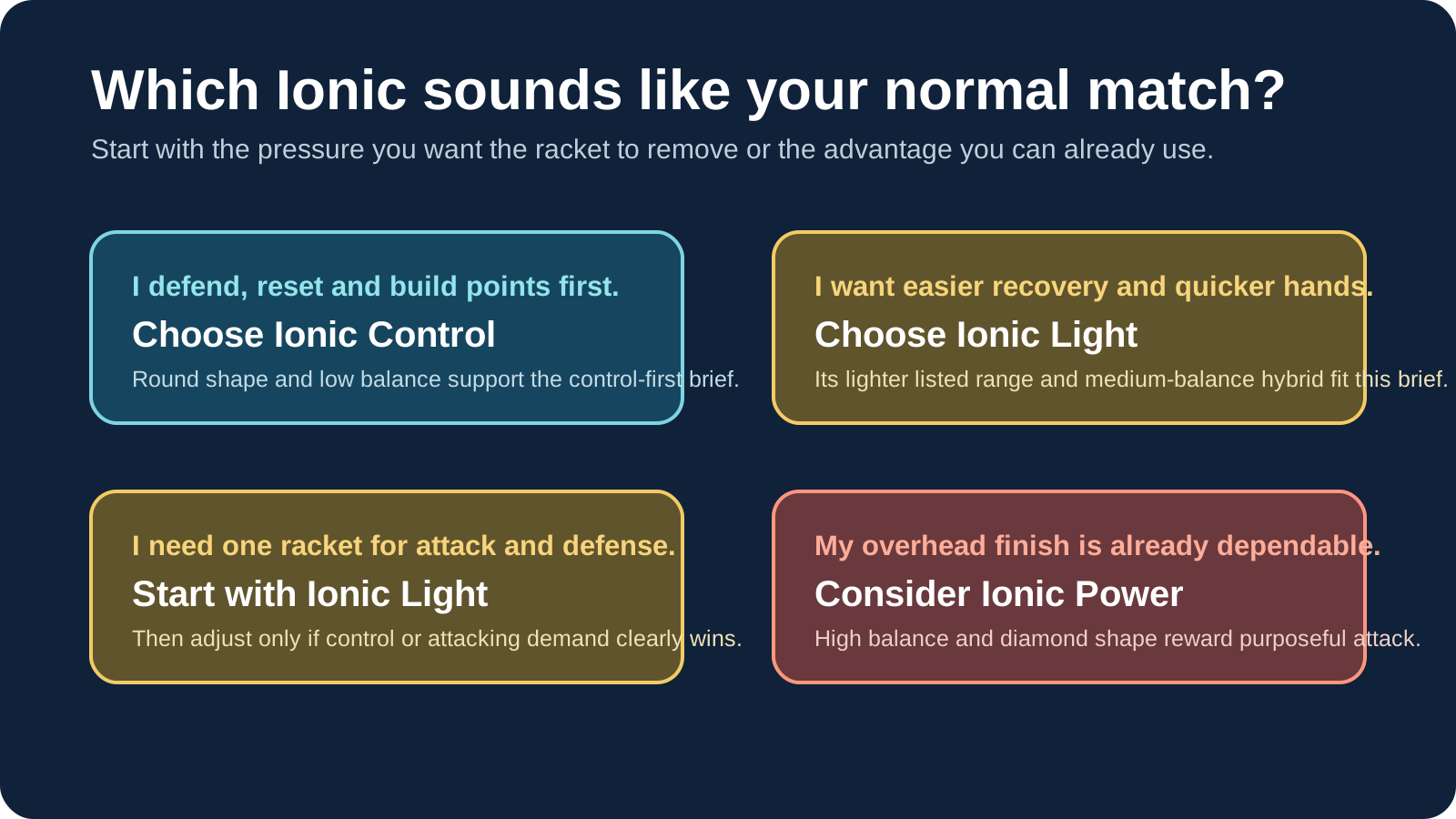
A four-player Ionic decision tree
Use this quick self-sort before you shop:
- Control-first defender: Choose Ionic Control if your best points come from placement, resets, lobs, and making your opponent play one more ball.
- All-court improver: Start with Ionic Light if you want a versatile middle ground for defense, net exchanges, and controlled attack.
- Player who needs faster hands: Start with Ionic Light if quicker recovery and a lower listed weight range matter more than maximum head-weighted punch.
- Player with a consistent attacking finish: Consider Ionic Power if you already create reliable pace and want a diamond/high-balance profile to support that intent.
The same answers make a useful shortlist for the racket fit recommender and comparison tool: level, court role, desired power, balance tolerance, and hand-speed priority. Decide those five inputs before you compare marketing names, colors, or isolated material claims.
If you are ready to check availability after choosing your fit, you can browse Bullpadel Ionic padel racket listings on Amazon. Verify the exact 2026 model and regional listing before ordering.
FAQ
Is Ionic Light only for women?
No. Bullpadel places Ionic Light in its women’s segment, but its practical fit comes from the listed 350–360 g range, hybrid shape, and medium balance. Any player can decide whether those design choices suit their game.
Is Ionic Power too demanding for an intermediate player?
Not automatically. Bullpadel lists it for intermediate and advanced players, but the important question is whether your attacking technique is already reliable. If you still need the racket to make defense and fast exchanges easier, Control or Light is usually the more sensible match.
Which Ionic is best for fast hands at the net?
Ionic Light is the clearest starting point because it has the lowest listed weight range in the trio and a medium-balance hybrid profile. Ionic Control can also appeal to a control-first player; decide whether you need all-court versatility or a more defense-led response.
Should I choose Ionic Control or Ionic Light?
Choose Control when defense, placement, and a round/low-balance profile are your priority. Choose Light when you want a more balanced all-court brief, a hybrid shape, and the quicker-handling case suggested by its lower listed range.
The bottom line
Choose Bullpadel Ionic Control for a control-first, defensive, repeatable game. Choose Ionic Light for a lighter-listed, hybrid, all-court route with faster-hands appeal. Choose Ionic Power when your attacking finish is already consistent enough to justify a diamond, high-balance profile.
The right racket should make your usual game easier to trust. Start there, then add power only when it solves a real on-court need.