Best Lightweight Padel Rackets for Fast Hands and Easy Defense (2026): Maneuverability, Comfort, and Net Speed
The best lightweight padel rackets in 2026 help you react faster, defend easier, and lower arm fatigue without giving away too much stability. Use this guide to choose by swing speed, balance, comfort, and net-handling needs.
Updated for August 2026.
Quick answer
If you want the short version, use this:
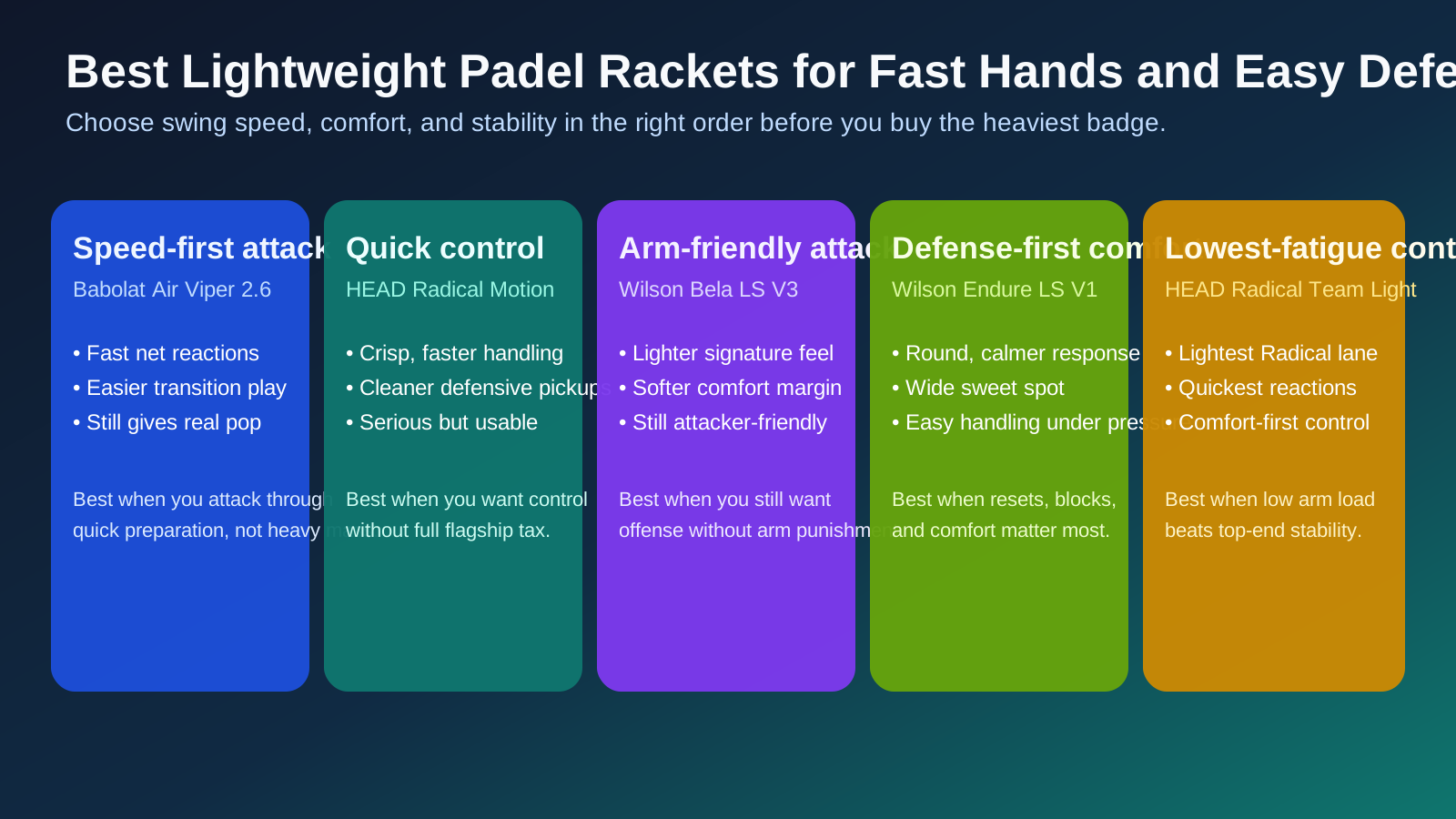
- Choose Babolat Air Viper 2.6 if you want to attack through faster preparation, quicker volleys, and easier defense-to-attack transitions.
- Choose HEAD Radical Motion if you want crisp control with faster hands and less total match burden than a heavier flagship frame.
- Choose Wilson Bela LS V3 if you still want an attacking identity, but with a lighter and more arm-friendly feel.
- Choose Wilson Endure LS V1 if your priority is easy defense, cleaner resets, and lower fatigue from a control-first frame.
- Choose HEAD Radical Team Light if you want the easiest, lowest-fatigue control option of the group.
For a lot of club players, the smartest lightweight racket is the one that gets into position faster, not the one that looks most serious on the wall.
Affiliate disclosure
Some links in this guide are affiliate links. If you buy through them, we may earn a commission at no extra cost to you.
What “lightweight” really means in padel right now
A lightweight padel racket is not just a small number on a spec sheet.
In real matches, it usually means:
- quicker preparation on volleys and hand battles
- easier defensive pickups when you are stretched or late
- lower arm and shoulder fatigue over long sessions
- cleaner recovery after the first block or reset
- less punishment when your timing is not perfect
That is why lightweight matters to more than beginners.
A lot of good club players, right-side players, mixed-role doubles players, and comfort-sensitive buyers actually play better when the racket gets to the ball faster.
If you want the broader framework on how grams usually sort across the market, our guide to best padel rackets by weight is the best companion read.
Why balance matters as much as the listed grams
This is where buyers get tricked.
Two rackets can live in a similar weight class and still feel very different in the hand.
That is because balance changes the swing burden.
A racket can be light on paper, but still feel demanding if too much of that weight pulls toward the head. On the other hand, a racket that is not the absolute lightest in the shop can still feel fast and easy if the handling stays clean.
That is why shape matters too. If you want the full geometry explanation, our guide to round vs teardrop vs diamond padel racket shape breaks down how sweet-spot help and racket personality usually shift across the main categories.
The short version is simple:
- teardrop and hybrid options often make sense for players who still want speed plus some attacking help
- rounder options often make sense for players who want easier defense, more comfort, and a calmer response
- low-balance control frames can be a great answer when you care more about quick hands than top-end mass
Choose swing speed before you chase raw mass
This is the most important point in the whole guide.
A lot of buyers still shop in the wrong order.
They start with the heaviest or most pro looking frame, then try to talk themselves into living with it.
For many players, that is backwards.
If your best padel comes from reacting early, blocking cleanly, getting the racket set faster at net, and staying fresh deeper into the match, then swing speed matters more than ego weight.
That does not mean everyone should buy the lightest racket available.
It means you should first ask whether you are actually losing points because you need more planted stability, or because you are a little late too often.
If the racket slows your hands, you will not reach the stability you paid for often enough.
The four filters that matter before you buy
1) Balance and swing burden
If you feel late at net, slow after the first volley, or clumsy on backhand blocks, this filter matters more than almost anything else.
A lighter-feeling racket can help you:
- set the face earlier on volleys
- recover quicker after contact
- handle awkward glass balls with less panic
- stay cleaner when the point speeds up
That is why lightweight can be such a good fit for the same kinds of players we talk about in our guide to best padel rackets for right-side players.
2) Sweet-spot help and shape
Not every lightweight buyer wants the same shape.
If you still want attacking help, a teardrop or hybrid option often makes the most sense because it can preserve some pop without going fully power-first.
If you want easy defense and cleaner resets, a rounder control frame can be smarter because the sweet spot usually feels calmer and more forgiving.
That is also why lightweight should not be reduced to one audience. If you want a broader look at manageable-fit options across different player types, our best padel rackets for women guide shows how fit, comfort, and easy handling can matter without turning the conversation into stereotypes.
3) Comfort, fatigue, and arm load
This is not just about injury.
It is also about whether the racket still feels good in the second hour.
If your forearm tightens, your shoulder fades, or your hand speed drops sharply as the match goes on, a lighter and easier-handling frame may help more than chasing more top-end authority.
If arm sensitivity is already a real issue for you, our best padel rackets for tennis elbow guide is worth reading before you buy anything stiff or tiring just because it looks more advanced.
4) How much stability are you willing to trade?
This is the honest downside of lightweight.
The lighter and quicker you go, the more likely you are to notice a limit against very heavy pace, off-center contact, or players who hit a big ball into your block.
That does not make lightweight wrong.
It just means you should choose it because faster reactions, easier preparation, and lower fatigue help your game more than extra planted mass would.
Best lightweight racket lanes in 2026
| Lane | Best fit | Example models | Biggest tradeoff |
|---|---|---|---|
| Speed-first attack | players who create offense through quick preparation and early contact | Babolat Air Viper 2.6, Wilson Bela LS V3 | less planted than heavier attack frames |
| Quick control | players who want crisp feel without a full flagship burden | HEAD Radical Motion | not as anchored as the firmest control rackets |
| Arm-friendly attack | players who still want offense but need a softer landing on the arm | Wilson Bela LS V3 | not the same brute-force feel as a heavier signature frame |
| Defense-first comfort | right-side or control-first players who want easier resets and lower fatigue | Wilson Endure LS V1 | lower top-end punch against hard pace |
| Lowest-fatigue control | players who want the easiest handling and fastest reactions | HEAD Radical Team Light | least planted option if you hit a heavy ball |
Best options by player profile
Right-side or control-first player who values quick reactions
If you win more points through blocks, resets, lobs, and volley control than through pure finishing, lightweight can be a very smart direction.
The best fits here usually look like Wilson Endure LS V1 or HEAD Radical Motion.
Endure LS V1 makes the strongest case if you want the calmest defensive personality. Radical Motion makes more sense if you still want a crisper, more tactical feel without drifting into a heavier flagship control frame.
Improving club player who feels late on volleys and defensive blocks
This buyer often thinks the problem is technique alone.
Sometimes it is. But sometimes the racket is simply asking for more strength, better preparation, or sharper timing than the player can repeat for a whole match.
That is where HEAD Radical Team Light becomes a very honest answer. It is not the loudest choice, but it can be the smartest one if lower fatigue and faster reactions would immediately improve your defense.
Comfort-sensitive player who still wants a serious frame
Some buyers know they still want real performance, but they also know a harsh racket taxes the arm too fast.
That is where Wilson Bela LS V3 stands out. Wilson positions it as a lighter, attacker-friendly option with arm-friendlier playability, which is exactly the kind of compromise a lot of serious club players should make sooner instead of later.
Doubles player who wants fast net hands and easier pressure defense
If your best points come from reading the rally early, getting set fast, and surviving quick exchanges at net, Babolat Air Viper 2.6 is the clearest showcase racket in this whole category.
Babolat’s own description leans hard into maneuverability, reactivity, and easier transition between defense and attack. That is why it also fits naturally beside the logic in our guide to best padel rackets for all-court players.
When lightweight helps — and when it costs too much stability
Lightweight helps most when:
- you are usually a little late rather than underpowered
- your game depends on fast hands more than hard finishing
- fatigue changes your level noticeably over a long match
- you play plenty of defensive or mixed-role doubles points
- you want cleaner racket preparation on volleys and awkward pickups
Lightweight can cost too much stability when:
- you already strike the ball cleanly and still feel you need more mass behind blocks
- you attack mainly through heavier contact instead of earlier preparation
- your opponents hit a big enough ball that your racket keeps getting pushed around
- you prefer the feel of firmer, more planted contact and can actually use it consistently
That is the dividing line.
Do not buy lightweight because it sounds easy.
Buy it because faster setup, easier defense, and lower fatigue solve more of your real match problems than extra heft would.
How to narrow your shortlist in 60 seconds
If you are stuck between two or three models, answer these four questions:
- Do I lose more points from late preparation or from lack of stability?
- Do I want a racket that feels best on quick exchanges or on heavier contact?
- How much comfort do I need before arm load becomes a problem?
- Do I mostly play right side, mixed-role doubles, or attack-first left side?
Those are the same filters any good racket fit recommender or comparison app should use before it starts showing brand names.
If you want a quick availability check after that, these searches are more useful than browsing blindly:
- Browse lightweight padel rackets on Amazon
- Browse maneuverable padel rackets for fast hands
- Browse arm-friendly lightweight padel rackets
- Browse quick-volley and defense padel rackets
FAQ
What counts as a lightweight padel racket in 2026?
In practical shopping, many players treat the lower part of the 355 g class as lightweight, and anything clearly below that as very light. But listed weight is only part of the answer. Balance and shape still decide how fast and easy the racket actually feels.
Is a lighter racket always better for defense?
Not automatically. A lighter racket often helps with preparation speed, quick reactions, and easier resets, but go too light for your game and you may start missing the planted feel you need on hard incoming pace.
Does low weight automatically mean less power?
Usually it means less free mass behind the ball, but not necessarily a weak racket. Some lighter teardrop or hybrid options still offer very usable pop, especially for players who attack through timing and speed rather than brute force.
Which lightweight racket style is best for right-side players?
For many right-side players, the smartest lightweight answers are control-first or defense-first options with quick handling and a calmer sweet spot. That is why models like Endure LS V1 or lighter control frames often make more sense than aggressive signature rackets.
When should I skip lightweight and buy something heavier?
Skip lightweight if you already prepare well, strike cleanly, and still feel your racket gets pushed around too easily. If lack of stability is the real problem, then moving slightly heavier or firmer can make sense.
Final verdict
The best lightweight padel rackets in 2026 are not just the lightest ones.
They are the ones that let you defend one more ball, react one beat earlier, and keep your hands alive when the point gets fast.
For many players, that means choosing a racket that helps them play quicker and fresher, not one that looks more advanced on paper.
If that sounds like your game, start by choosing your lane:
- Air Viper 2.6 for speed-first attack
- Radical Motion for quick control
- Bela LS V3 for arm-friendly attack
- Endure LS V1 for easy defense and comfort
- Radical Team Light for the lowest-fatigue control option
That buying order is a lot smarter than chasing raw mass first.