Wilson Defy vs Blade vs Endure (2026): Which Wilson Line Fits Your Game?
Compare Wilson Defy, Blade, and Endure in 2026 by power, control, maneuverability, and side-of-court fit so you choose the right Wilson line first.
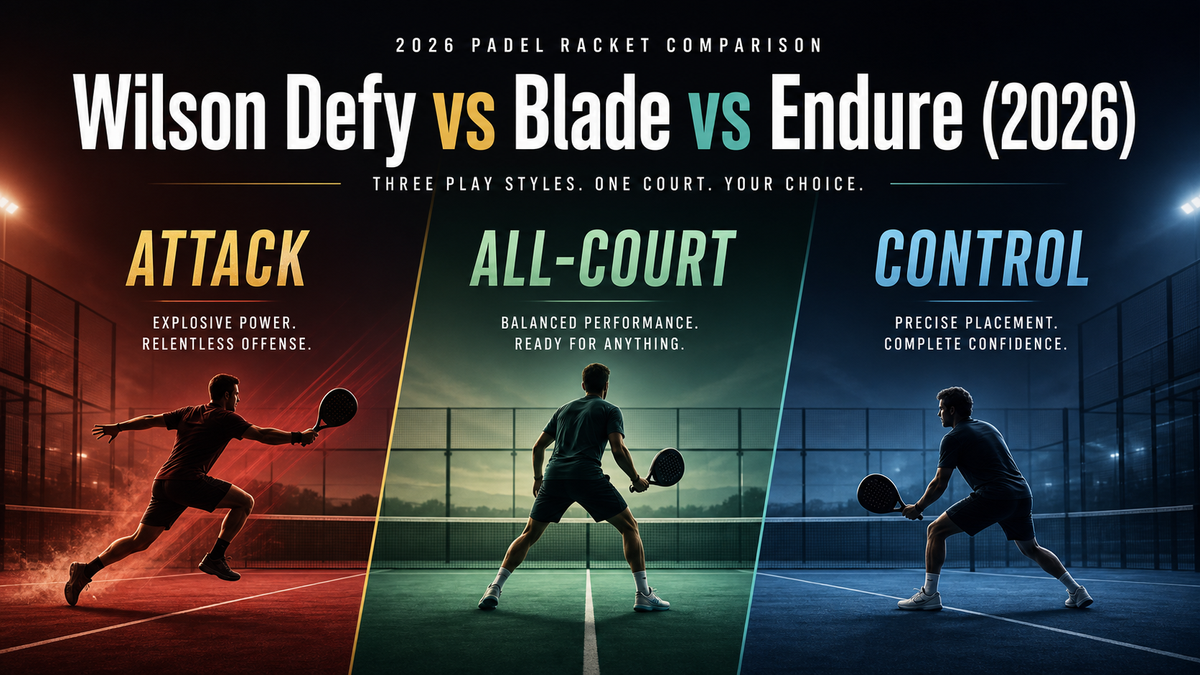
Updated for July 2026.
Quick answer
If you want the short version, use this:
- Choose Defy if you are an aggressive player who genuinely wants Wilson’s attack-first line and can live with the extra demand that comes with it.
- Choose Blade if you want the most balanced all-court Wilson option and do not want to overcommit too early to an extreme power or control story.
- Choose Endure if you want control, maneuverability, cleaner resets, and a more confidence-first feel from the back of the court.
For a lot of buyers, the smartest Wilson answer is Blade or Endure before it is Defy.
Affiliate disclosure
Some links in this guide are affiliate links. If you buy through them, we may earn a commission at no extra cost to you.
What Wilson means by Defy, Blade, and Endure in 2026
Wilson’s current padel range is easier to understand if you stop thinking in individual model names first and start with the family identity.
The cleanest way to think about it is this:
- Defy is Wilson’s attack lane.
- Blade is the all-court bridge.
- Endure is the control lane.
That matters because most buying mistakes happen when players skip straight to Pro badges, signature names, or cosmetics before deciding what kind of racket help they actually need.
If you already know you are specifically shopping inside Wilson’s Bela branch, our guide to Wilson Bela Pro V3 vs Bela V3 vs Bela LS V3 solves that narrower question. This page is for the bigger Wilson decision:
Do you want attack, balance, or control?
In live 2026 shopping, that usually means some version of:
- Defy Pro V1 / Defy V1 for the power-first lane
- Blade V4 / Blade LS V4 for the balanced all-court lane
- Endure Pro V1 / Endure V1 / Endure LS V1 for the control-first lane
Wilson Defy vs Blade vs Endure at a glance
| Line | Core 2026 fit | Best for | Biggest tradeoff |
|---|---|---|---|
| Defy | power-first, aggressive attacking line | left-side attackers and buyers who want harder overhead pressure | easiest line to overbuy |
| Blade | balanced all-court bridge | versatile players who want help in every phase of the point | less extreme identity than Defy or Endure |
| Endure | control-first, maneuverable line | right-side players, builders, and buyers who want cleaner resets and placement | less naturally explosive than Defy |
Shape still matters, of course. If you want the deeper geometry primer, our round vs teardrop vs diamond padel racket shape guide is worth reading next.
But with Wilson, the family identity tells you a lot before you even get into the exact model.
Choose your Wilson lane before you choose your Wilson model
This is the most important section in the article.
A Wilson family label is not a seriousness badge.
It is a match-behavior clue.
- Defy tells you Wilson expects you to create offense through a more aggressive, more committed frame.
- Blade tells you Wilson is aiming for a player who wants balance, transitions, and fewer hard tradeoffs.
- Endure tells you the priority is control, maneuverability, touch, and cleaner rally management.
That means the smartest buying sequence is usually:
- choose the family
- then choose the model version inside that family
If you reverse that order, it is easy to end up with the wrong racket for your real game.
Four filters that matter before you buy
1) Which side of the court do you really play?
This is still the cleanest starting point.
If you mainly play the left side and you win points through heavier volleys, overhead pressure, and more forceful finishing, Defy makes the strongest first impression.
If you are a true all-court player who needs to defend, transition, counter, and still attack when the point opens up, Blade usually makes more sense.
If you mostly play the right side and care more about resets, lobs, blocks, placement, and point construction, Endure is the most natural Wilson lane. That is the same pattern we talk about in our best padel rackets for right-side players guide.
2) Do you create offense through mass or through transitions?
Not every attacking player attacks the same way.
Some players create offense through heavier contact and a more forceful frame.
Others create offense through quicker hands, easier preparation, and cleaner transitions between defense and net play.
That is the biggest difference between Defy and Blade.
- Defy is for players who really want the power story.
- Blade is for players who still want offense, but not at the cost of everything else.
- Endure is for players who would rather build the point and accelerate only when the opening is real.
3) How much sweet-spot help and defensive calm do you need?
The wrong racket often feels great for a few perfect games.
Then the point gets messy.
You are late to a volley, stretched on the glass, or trying to reset under pressure, and the racket’s real personality shows up.
- Defy gives you the smallest margin for error of these three families.
- Blade is the middle ground if you want help without feeling boxed into a control-only identity.
- Endure gives you the cleanest path to repeatable placement and calmer defense.
That is why Endure can make a lot more sense than buyers expect, especially for players who care about winning ugly points as much as clean ones.
4) Are you shopping for fit or for the most aggressive badge?
This question saves people money.
A lot of buyers want the Wilson line that sounds most dangerous.
That is not the same as wanting the Wilson line that will help you play better in the third set, when your timing drops and your feet slow down.
If you already know you are sensitive to swing weight, fatigue, or late-match handling, our best padel rackets by weight guide is a useful companion to this decision.
Who should buy Defy?
Defy is Wilson’s line for players who genuinely want a more aggressive attacking frame.
That usually means:
- you mostly play the left side
- you like finishing points with more force
- you are comfortable with a more demanding racket personality
- you do not mind paying a handling tax for a more offensive identity
This is the Wilson lane most likely to attract players who love the idea of power.
That is the danger.
If your real game fits the hitters in our best padel rackets for left-side players guide or the stronger profiles in our best padel rackets for advanced players guide, Defy makes sense.
If you mostly want a racket that still feels clean when you are defending, blocking, and recovering under pressure, it often does not.
Defy is right when you really want the work that comes with the power story.
Who should buy Blade?
Blade is the most important line in this comparison because it is the Wilson family many real buyers should start with.
It sits in the middle for a reason.
Blade makes sense for players who want:
- an all-court racket identity
- a better blend of defense and attack
- easier transitions than a pure power frame
- enough offensive support without forcing a constant power-first commitment
That is why Blade is such a useful answer for:
- strong intermediates
- improving all-court players
- buyers who like Wilson but are not sure they should jump straight into Defy
- players who want one racket family that still makes sense in a wide range of match situations
Blade is the answer for players who want Wilson to help in every phase of the point, not just the loudest one.
If you are the kind of buyer who keeps changing your mind between “I want more attack” and “I still need easier defense,” Blade is probably the Wilson lane you should test first.
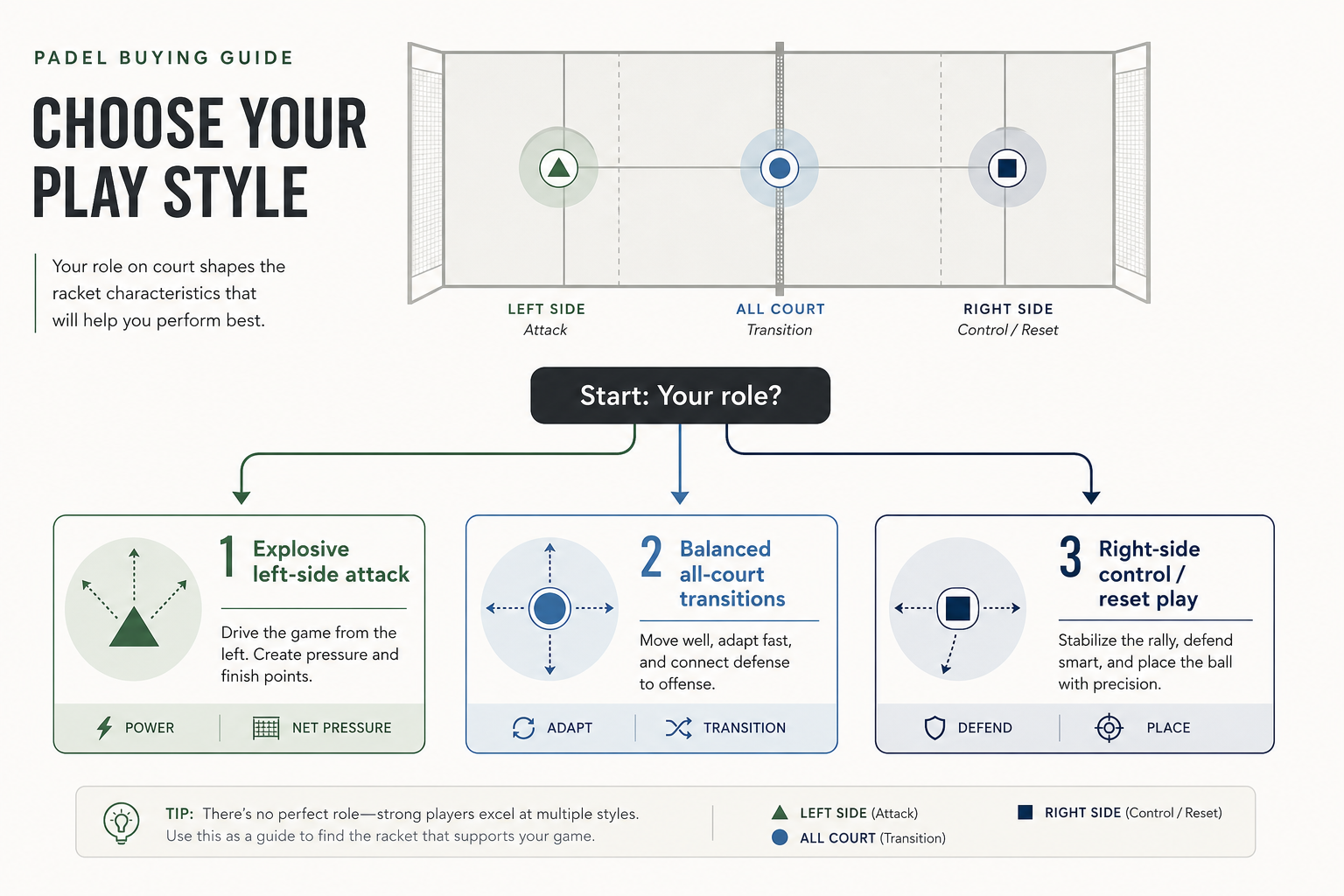
Most Wilson buyers should sort themselves by role first: attack, all-court balance, or control.
Who should buy Endure?
Endure is Wilson’s control-first lane, but do not make the mistake of reading that as passive or low-level.
The better way to think about Endure is this:
It is for players who want the point to feel cleaner, calmer, and more repeatable.
Endure makes the most sense if:
- you play a lot of right-side points
- you win through resets, lobs, placement, and consistency
- you want easier maneuverability through long rallies
- you value touch and control more than raw finishing force
For many players, that is a smarter identity than chasing the most aggressive frame in the catalog.
And Endure is not only for purely defensive players.
A lot of competitive players still want a racket that helps them defend well, transition cleanly, and only then choose their attacking moments. That is where Endure becomes very attractive.
If your game sounds closer to reading the rally than forcing it, Endure is probably the better Wilson lane. That is exactly why it fits the logic in our best padel rackets for right-side players guide.
When Blade is the smarter buy than Defy
This is where a lot of people should slow down.
Choose Blade over Defy if:
- you like the idea of attack, but not the constant burden of a power-first frame
- you still need easier defensive recovery and quicker transitions
- you want Wilson performance without buying the most extreme family first
- you know your game is more mixed than pure left-side finishing
In plain English:
Blade is the smarter Wilson buy when you want to play well across the whole match, not just feel dangerous on the cleanest overheads.
For a lot of improving players, that is the real answer.
When Endure is the right answer even if you are not “defensive only”
This is the other big misunderstanding.
A lot of buyers hear control and assume that means low upside.
Not necessarily.
Endure can be the right Wilson answer if:
- you create your edge through placement and decision-making
- you want a more maneuverable, confidence-first frame
- you prefer building pressure over forcing it too early
- you want a racket that helps you stay cleaner when the rally gets awkward
That can still be a competitive, serious player profile.
In fact, for some players, Endure produces more real match value than a louder attacking line because it helps them make fewer errors and handle more difficult balls with confidence.
Which Wilson line should you buy?
If you want the cleanest answer, use this:
- Buy Defy if you are an attack-first player who genuinely wants Wilson’s power lane.
- Buy Blade if you want the best Wilson all-court bridge and the least risky starting point for a lot of improving players.
- Buy Endure if you want control, cleaner resets, better maneuverability, and a more confidence-first match feel.
If you are still stuck, ask yourself four questions:
- Do I mostly play left side, right side, or true all-court?
- Do I create offense through force or through transitions?
- Do I need more sweet-spot help when I am late?
- Am I buying for fit, or for the most aggressive badge?
That last question matters more than most people think.
If you already know your Wilson lane
If you just want to check current options, these searches are more useful than bouncing between random listings:
- Browse Wilson Defy 2026 padel options on Amazon
- Browse Wilson Blade V4 2026 padel options on Amazon
- Browse Wilson Endure 2026 padel options on Amazon
- Search Wilson Defy vs Blade vs Endure on Amazon
FAQ
Is Wilson Defy better than Blade?
Not automatically. Defy is better only if you genuinely want a more aggressive, more demanding power-first line. Blade is better if you want a more balanced all-court racket family with fewer tradeoffs.
Is Wilson Endure only for defensive players?
No. Endure is control-first, but that does not make it passive. It can also suit competitive players who build points well, value placement, and want cleaner transitions from defense into attack.
Which Wilson line is best for intermediate players?
For many intermediate players, Blade is the safest starting point because it offers balance without forcing a power-first or control-first extreme. Endure is also a strong choice for players who naturally lean toward control and consistency.
Should right-side players start with Endure?
Often yes. If your game depends on resets, lobs, blocks, and cleaner point construction, Endure is usually the most natural Wilson family to start with.
Is Blade the safest Wilson all-court choice in 2026?
For a lot of buyers, yes. It is the line most likely to make sense if you want Wilson performance but do not want to overcommit to a demanding attack frame or a pure control identity.
Final verdict
If you want the sharpest takeaway, it is this:
Defy is Wilson’s line for buyers who really want attacking burden and finishing force. Blade is the balanced all-court bridge and probably the smartest starting point for a lot of improving players. Endure is the control-first line for players who care more about clean resets, placement, and maneuverability than the loudest power story.
The smart Wilson buy is not the most aggressive badge.
It is the line that still fits when the point gets messy.