Padel Scoring Rules for Tennis Players: Points, Deuce and Tie-Breaks Explained
Padel keeps tennis scoring — 15, 30, 40, deuce, sets to six — then changes what happens at 40–40. Golden point, the new star point, doubles serving order and tie-breaks, explained for tennis players.
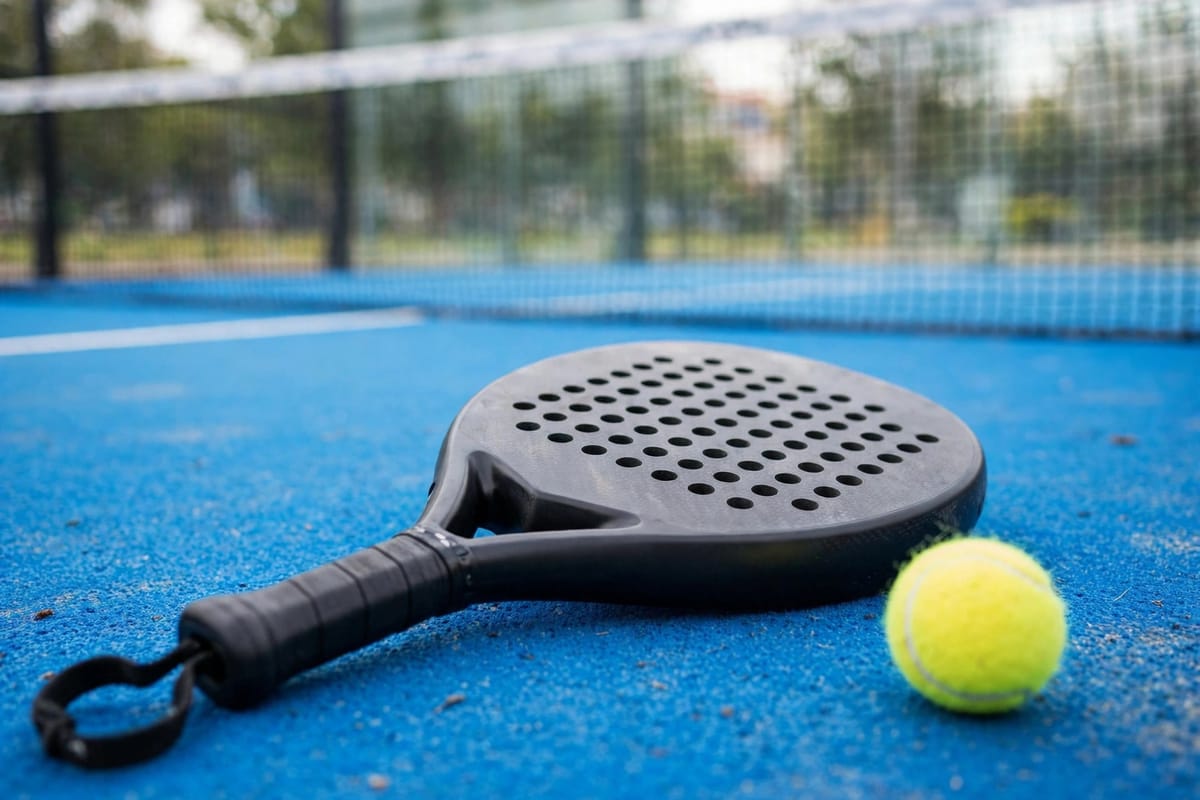
If you already play tennis, padel scoring rules will feel familiar from the first point: the same 15, 30, 40 ladder, deuce at 40–40, and sets won to six games. The differences hide at deuce, where padel adds a golden point and, from 2026, a star point, and in the doubles serving order you need to track. This guide covers points, games, sets and tie-breaks in the order you will meet them on court.
Padel scoring at a glance: the tennis numbers you already know
A padel game is scored exactly like a tennis game. Win a rally and you move up one step; the serving pair's score is always called first, so 30–15 means the servers have won two points and the receivers one.
| Points won | Score called |
|---|---|
| 0 | Love |
| 1 | 15 |
| 2 | 30 |
| 3 | 40 |
| 4 | Game, if the winning condition is met |
You win a point the tennis way, too: your opponents let the ball bounce twice, hit the net, or hit the ball out. The one padel twist is that a shot which bounces in the court and then hits the glass or mesh is still in play, because the walls are part of the rally. A shot that hits the wall or fence on your opponents' side before bouncing is out, just as a ball into the tramlines is out in tennis.
What happens at deuce: advantage, golden point and star point
At 40–40 the score is deuce, and this is where padel scoring rules split into three formats. The FIP rulebook recognises all three, and the organiser — or your group, in a social match — chooses which one applies before play starts.
| Format at 40–40 | How the game is decided |
|---|---|
| Advantage | Win two points in a row, as in tennis |
| Golden point | One deciding point, played immediately |
| Star point | Up to two advantage cycles, then one deciding point |
Advantage is the traditional tennis method: the pair that wins the next point holds advantage, and one more point takes the game. Lose it, and the score returns to deuce, for as long as it takes.
Golden point (punto de oro) removes advantage entirely. A single point at 40–40 decides the game, and the receiving pair chooses which of its two players returns serve. It keeps matches moving and puts real weight on one rally.
Star point is the newest format, added to the FIP rules in November 2025 and used on the Premier Padel and FIP tours from 2026. You play advantage as normal, but only up to twice. If the score comes back to deuce a third time, one deciding star point is played, again with the receiving pair choosing who receives.
The practical lesson for a tennis player is simple: never assume. Ask which deuce format the match is using before the first game, because it changes how you play at 40–40.
Games, sets and the padel tie-break
Games build into sets the way they do in tennis, with the same margins:
- A set goes to the first pair to six games with a two-game lead — 6–4 ends it, 6–5 does not.
- At 6–6 a tie-break decides the set, recorded as 7–6.
- A match is normally best of three sets: first to two sets wins.
The tie-break looks like a tennis tie-break, with one doubles adjustment in the service pattern. Points are counted in plain numbers — 1, 2, 3 — not 15s and 30s. The player whose turn it is to serve takes the first point, from the right side. Service then passes to the other pair for two points, and continues in two-point turns, following the normal serving order. The first pair to seven points with a two-point lead wins; at 6–6 in the tie-break, play continues until one pair leads by two. Pairs change ends after every six tie-break points.
Some formats replace a deciding final set with a super tie-break to 10 points, again won by two clear points. Club competitions use it to fit booked court time, and some FIP tour events use a match tie-break to 10 as the final set — agree the format before you start.

Serving order and calling the score: the doubles differences
Tennis singles players have only themselves to track. Padel is always doubles, so the scoring carries a small amount of bookkeeping that catches newcomers out:
- Partners alternate serving games. One player serves a full game, then a player from the other pair serves, then the first pair's other partner — the rotation runs all set.
- The order is fixed for the set. Each pair decides who serves first and who receives first at the start of a set, and that serving and receiving order stays until the set ends.
- Every game starts on the right. The server begins each game from the right-hand side and alternates sides after every point, serving diagonally into the opposite service box, underarm and below waist height after a bounce.
- Change ends on odd games. Pairs swap ends after the first, third and every odd-numbered game, exactly as in tennis.
- Call the server's score first, and say it before every point. Most scoring disputes in social padel start with a score nobody announced.
None of this is hard, but it is constant: forget the rotation once and the whole court loses track of who serves next, especially after a long deuce game.
Five scoring differences from tennis to settle before you play
- Which deuce format? Advantage, golden point or star point — the single biggest difference from tennis, and it must be agreed before the match.
- The walls keep rallies alive. A ball that bounces in and then hits glass is still live, so rallies — and points — last longer than a tennis player expects.
- Final set format. A full third set, or a super tie-break to 10? Clubs often choose the super tie-break to protect the court booking.
- Set length in social formats. Short sets to four games are common in club play; check before assuming a set runs to six.
- The receiving pair picks at deciding points. On a golden point or star point, the receivers choose who takes the serve — plan for it at 40–40, not after the toss.
Settle those five in the warm-up and the rest of the scoring will run itself on tennis instincts.
FAQ
Is padel scoring the same as tennis scoring?
Mostly, yes. Padel uses the same 15, 30, 40 point ladder, deuce at 40–40, sets to six games with a two-game margin, a tie-break at 6–6, and best-of-three-set matches. The differences are the deuce formats — golden point and star point have no tennis equivalent — and the fixed doubles serving order.
What is a golden point in padel?
A golden point is a single deciding point played at 40–40 instead of advantage scoring. The receiving pair chooses which player returns serve, and whoever wins that one point wins the game. It is widely used in social play, leagues and club tournaments because it keeps matches moving and adds pressure to one rally.
What is the star point in padel?
The star point is the deciding-point format the FIP added to the rules in November 2025 and the pro tours adopted for 2026. At deuce, pairs play advantage as normal up to two times. If the game returns to deuce a third time, one star point decides it, with the receiving pair choosing who receives.
The takeaway
Padel scoring rules are tennis scoring with three decisions layered on top: how deuce is played, how the final set is settled, and a doubles serving order to keep straight. Learn the golden point and star point before your first match, agree the formats in the warm-up, and the numbers will never slow your game down.
Sources
- International Padel Federation (FIP), Rules of Padel, edition effective 1 January 2026 — padelfip.com
- Padel Relay, "Padel rules and scoring explained" (based on the current FIP Rules of Padel) — padelrelay.co.uk
- WhatThePadel, "Padel rules explained: a friendly FIP summary of the official rules for beginners" (updated for the 2026 FIP rulebook) — whatthepadel.com
- VMSPadel, "Padel Scoring Explained: Points, Games, Sets & 2026 Rules" (summarising FIP Rules 1 and 5) — vmspadel.com
- SimplePadel, "Padel Rules Explained: Scoring, Serving & How to Play" and "Golden Point in Padel" — simplepadel.com